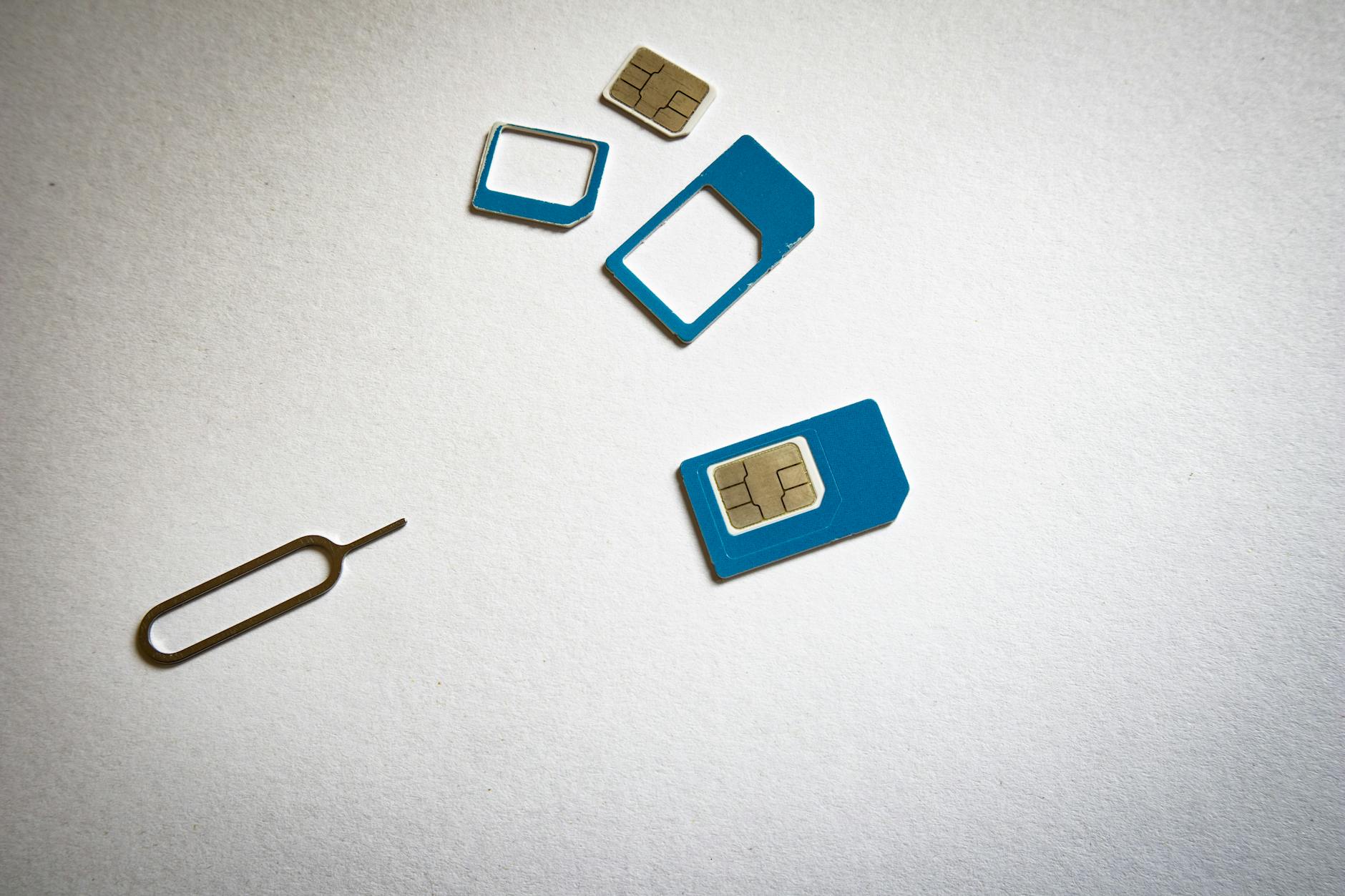
If your SIM card has been swapped, you need to act within minutes, not hours. Call your mobile carrier immediately from a different phone, tell them your number has been hijacked, and demand they freeze the account and reverse the port. Then change the passwords on your email, banking, and cryptocurrency accounts before the attacker can use your intercepted text messages to reset them. In January 2024, the SEC’s official X account was compromised through a SIM swap, and the attacker posted a fake Bitcoin ETF approval that briefly moved markets — all because a single phone number was redirected to a new SIM card. SIM swapping, also called SIM hijacking, is a social engineering attack where a criminal convinces your carrier to transfer your phone number to a SIM card they control. Once they have your number, every two-factor authentication code sent via SMS goes straight to them.
The attack doesn’t require any technical sophistication on the victim’s device — it exploits the carrier’s customer service process, not your phone’s software. This article walks through the immediate steps to take after a swap, how to lock down accounts that rely on SMS verification, how to deal with your carrier’s fraud department, and what preventive measures actually work versus which ones give a false sense of security. The uncomfortable truth is that most people don’t realize they’ve been SIM swapped until significant damage is already done. Your phone losing service is the first and most obvious sign, but many victims assume it’s a network outage and wait it out. That delay is exactly what attackers count on. Understanding the full response playbook — and having it ready before you need it — is the difference between losing a phone number for an afternoon and losing your savings account.
Table of Contents
- What Should You Do in the First 30 Minutes After a SIM Swap?
- Why Your Carrier’s Security Failed and What to Demand From Them
- How Attackers Choose and Research SIM Swap Targets
- Moving Away from SMS — Which Two-Factor Methods Actually Protect You
- What to Do If You’ve Already Lost Money or Access to Accounts
- How Carriers and Regulators Are Responding to the SIM Swap Epidemic
- The Future of Phone Number-Based Authentication
- Frequently Asked Questions
What Should You Do in the First 30 Minutes After a SIM Swap?
The first half hour after discovering a SIM swap is a triage situation, and your priorities need to be ruthlessly ordered. Step one: call your carrier from someone else’s phone or use their online chat. Tell them you suspect an unauthorized SIM swap and that you need the transfer reversed and your account locked. T-Mobile, AT&T, and Verizon all have fraud departments, but reaching them quickly through the standard customer service menu can be frustrating. Say the word “fraud” early and often to get escalated. Ask for a case number and the name of the representative. Step two, while you’re still on with the carrier or immediately after, is securing your email. Your primary email account is the skeleton key to your entire digital life because almost every other account uses it for password resets.
Log in from a computer — not your phone, which is compromised — and change the password. If you’re already locked out, use backup codes or contact the email provider’s account recovery process. Google, Microsoft, and Apple all have dedicated flows for compromised accounts, but they can take hours to days, which is why having backup codes stored offline matters so much. Step three is financial accounts. Log into your bank, credit card, and any investment or cryptocurrency accounts and change passwords. Call your bank directly and inform them of the SIM swap — many banks will place a temporary hold or add extra verification steps. In 2023, a California man lost $400,000 in cryptocurrency within 45 minutes of a SIM swap because the attacker used SMS codes to access his Coinbase account and initiate transfers. Cryptocurrency transactions are irreversible, which makes crypto holders particularly high-value targets. If you hold any significant amount of crypto, this step cannot wait.

Why Your Carrier’s Security Failed and What to Demand From Them
SIM swaps succeed because carriers authenticate customers using information that is either publicly available or easy to obtain through data breaches. The last four digits of your Social Security number, your billing address, your date of birth — these are the standard verification questions, and all of them have likely been exposed in at least one breach. Attackers also bribe or socially engineer carrier employees directly. A 2023 investigation found that T-Mobile retail employees were being offered $300 per swap by criminal rings, and some accepted. When you contact your carrier after a swap, don’t just ask them to reverse it. Demand that they add a port-out PIN or transfer PIN to your account — this is a separate code required before your number can be moved to a new SIM. AT&T calls it a “passcode,” T-Mobile uses “account PIN,” and Verizon offers “Number Lock.” These are not the same as your regular account PIN, and the terminology varies enough between carriers to cause confusion.
Be explicit: you want the protection that prevents your number from being ported to a different SIM or carrier without a separate authorization code. However, be aware that these PINs are not bulletproof. If an attacker has an insider at the carrier, a port-out PIN can be overridden. It raises the bar significantly but does not eliminate the risk entirely. You should also ask your carrier for records of how the swap was authorized. Who processed it? Was it done in a retail store or over the phone? This information matters for two reasons: it helps any subsequent fraud investigation, and it establishes whether the carrier was negligent. Several class action lawsuits have been filed against major carriers for failing to protect customers from SIM swaps, with some resulting in significant settlements. If your financial losses are substantial, this documentation becomes the foundation of a potential legal claim.
How Attackers Choose and Research SIM Swap Targets
SIM swap attackers don’t pick victims at random. They target people who are likely to have valuable accounts accessible via SMS-based two-factor authentication, and they do their homework before initiating the swap. Cryptocurrency investors are the most common targets because blockchain transactions cannot be reversed, but high-net-worth individuals, social media influencers with valuable handles, and even corporate executives have all been hit. In 2022, a group of SIM swappers specifically targeted people who had publicly discussed Bitcoin holdings on Twitter, cross-referencing their profiles with data from the Ledger hardware wallet breach that leaked customer names and phone numbers. The research phase typically involves aggregating information from multiple data breaches. An attacker might pull your email and phone number from one breach, your date of birth from another, and your billing address from a third. Services on dark web marketplaces sell pre-compiled “fullz” — complete identity packages — for as little as $15 to $30 per person.
This is why a single data breach at a company you barely remember signing up for can contribute to a SIM swap years later. The attacker doesn’t need to hack you directly. They just need enough personal details to pass your carrier’s identity verification, which was designed for convenience, not adversarial conditions. Some attackers skip the social engineering entirely and go straight to bribing carrier employees. Federal prosecutors have brought cases against SIM swap rings that paid insiders at T-Mobile and AT&T between $100 and $1,000 per unauthorized swap. A former T-Mobile employee testified in one case that the process took less than two minutes using the internal system. This insider threat is the hardest vector to defend against as an individual customer, because no amount of personal security hygiene can prevent a corrupt employee from overriding your account protections.
Moving Away from SMS — Which Two-Factor Methods Actually Protect You
The most effective long-term response to a SIM swap is eliminating SMS as a second factor everywhere you can. But not all alternatives are equal, and switching has real tradeoffs. Hardware security keys like YubiKeys offer the strongest protection — they use cryptographic challenge-response authentication that cannot be phished, intercepted, or replicated remotely. Google reported that after requiring hardware keys for all 85,000 employees in 2017, the company experienced zero successful phishing attacks on employee accounts. The downside is cost ($25 to $70 per key, and you should buy two in case one is lost), the need to carry a physical object, and limited support from some services. Authenticator apps like Google Authenticator, Authy, and Microsoft Authenticator generate time-based one-time passwords (TOTP) on your device. They’re significantly better than SMS because codes are generated locally and never transit a phone network, so a SIM swap is irrelevant. However, they’re not immune to all attacks.
A sophisticated phishing page can relay TOTP codes in real time — the attacker captures your code and uses it within its 30-second validity window. This is called a real-time phishing attack, and it’s been used against targets with authenticator apps. Hardware keys are resistant to this because authentication happens through direct cryptographic verification with the legitimate site’s domain. For most people, the practical recommendation is a layered approach. Move your email and financial accounts to either hardware keys or authenticator apps. For accounts that only support SMS-based two-factor, consider whether you even need those accounts, and if you do, minimize the sensitive data stored in them. Some banks and financial institutions still only offer SMS as a second factor — in those cases, a port-out PIN on your carrier account is your main line of defense, and you should also push the institution to support better methods. The transition takes an afternoon of work across your accounts, and it dramatically reduces your exposure.
What to Do If You’ve Already Lost Money or Access to Accounts
If an attacker has already drained accounts or locked you out of critical services, the situation shifts from prevention to damage control and recovery, and the process is more bureaucratic and slower than most people expect. File a report with the FBI’s Internet Crime Complaint Center (IC3) at ic3.gov and with your local police department. The local police report matters because banks and insurers often require one. Be specific about what was taken — dollar amounts, account numbers, transaction IDs if you have them. IC3 reports feed into federal investigations, and several major SIM swap rings have been prosecuted based partly on aggregated victim reports. For bank and credit card fraud, federal regulations generally protect you. Regulation E limits your liability for unauthorized electronic fund transfers to $50 if reported within two days, and most banks waive even that.
However, this protection does not extend to cryptocurrency. If Bitcoin or Ethereum was transferred out of your exchange account, the exchange may cooperate with law enforcement, but there is no regulatory mechanism to force a refund. Coinbase, Kraken, and other exchanges have sometimes frozen funds when alerted quickly enough, but if the attacker has already moved the crypto through a mixer or off-ramped to a non-cooperative exchange, recovery is unlikely. One often-overlooked step is placing a fraud alert or credit freeze with all three credit bureaus — Equifax, Experian, and TransUnion. A SIM swap means the attacker had enough personal information to impersonate you to your carrier, which means they likely have enough to open credit accounts in your name. A credit freeze is free, takes about ten minutes per bureau, and prevents new accounts from being opened. You can temporarily lift it when you need to apply for credit. This won’t help with the immediate SIM swap damage, but it prevents the secondary wave of identity theft that frequently follows.

How Carriers and Regulators Are Responding to the SIM Swap Epidemic
The FCC adopted new rules in November 2023 requiring carriers to use secure authentication before processing SIM changes and to notify customers immediately when a swap occurs. These rules were a direct response to the surge in SIM swap complaints — the FBI reported over $68 million in SIM swap losses in 2021 alone, and the actual figure is likely much higher since many cases go unreported. T-Mobile, AT&T, and Verizon have all introduced additional verification steps, including in-store ID requirements for SIM changes, but enforcement and implementation remain inconsistent across retail locations and customer service channels.
Internationally, some countries have moved further. Australia’s telecommunications regulator implemented a multi-factor identity verification requirement for SIM swaps in 2022 that includes matching government ID documents, which has reportedly reduced successful attacks. In the United States, the problem is complicated by the number of carriers, MVNOs (mobile virtual network operators that resell service on major networks), and the decentralized nature of retail operations. Until carrier employees face meaningful consequences for unauthorized swaps and the verification process is fundamentally redesigned, the vulnerability will persist in some form.
The Future of Phone Number-Based Authentication
The broader trend in cybersecurity is moving away from phone numbers as identity anchors. NIST deprecated SMS-based two-factor authentication in its digital identity guidelines back in 2016, but adoption of alternatives has been slow because SMS is universal, requires no app installation, and works on any phone. Passkeys — the FIDO2-based passwordless authentication standard now supported by Apple, Google, and Microsoft — represent the most promising replacement. They tie authentication to a specific device using public key cryptography, making remote interception impossible.
The transition will take years, and phone numbers will remain a weak link during that period. Financial institutions in particular have been slow to adopt passkeys and hardware key support, partly because of the customer support burden of helping users who lose their keys. In the meantime, the best defense remains a combination of port-out PINs, non-SMS two-factor authentication on critical accounts, monitoring for sudden loss of cellular service, and having a response plan ready before you need one. The goal is to make your accounts resilient enough that a SIM swap, even if successful, doesn’t give the attacker access to anything of real value.
Frequently Asked Questions
How can I tell if my SIM has been swapped?
The most obvious sign is your phone suddenly losing all cellular service — no calls, no texts, no data — while the phone itself is powered on and the SIM is inserted. You may also receive a notification from your carrier about a SIM change you didn’t request. If your phone shows “No Service” or “Emergency Calls Only” unexpectedly, call your carrier from another phone immediately to check.
Can a SIM swap happen if I use an eSIM instead of a physical SIM?
Yes. eSIM swaps work through the same carrier account management systems as physical SIM swaps. The attacker convinces the carrier to provision your number on a new eSIM profile on their device. Some carriers have marginally better security for eSIM transfers, but the fundamental vulnerability — social engineering carrier employees — applies equally to both.
Will a VPN protect me from a SIM swap?
No. A VPN encrypts your internet traffic, but a SIM swap intercepts your phone number at the carrier level. These are completely unrelated attack surfaces. A VPN will not prevent an attacker from receiving your SMS codes after a swap.
How long does it take a carrier to reverse a SIM swap?
Typically between one and four hours once you’ve reported it, though some victims have reported delays of 24 hours or more, especially if the swap was done through an insider. During this time, the attacker has full access to your phone number. This is why securing your accounts independently of your phone number is critical and should not wait for the carrier to restore your service.
Should I sue my carrier after a SIM swap?
If your losses are significant, consulting an attorney is worth considering. Multiple lawsuits against T-Mobile, AT&T, and other carriers have resulted in settlements ranging from tens of thousands to millions of dollars, particularly when the carrier failed to enforce its own security protocols or when an insider was involved. Small claims court is also an option for losses under your state’s limit, usually $5,000 to $10,000.
Does freezing my credit help after a SIM swap?
A credit freeze doesn’t directly address the SIM swap itself, but it prevents the attacker from using the personal information they gathered — which was enough to fool your carrier — to open new credit accounts in your name. Since SIM swap victims are at elevated risk for broader identity theft, a credit freeze with all three bureaus is a strongly recommended follow-up step.
You Might Also Like
- How to Protect Your Loyalty Card Information
- What to Do If Your Telehealth Records Are Exposed
- What to Do If Your Resume Is Leaked Online