Protecting your poll results privacy requires understanding how your responses are collected, stored, and shared by the platforms hosting those polls. Most online polling services track identifying information alongside your votes—your IP address, device fingerprint, email, and sometimes location—even when they claim to offer anonymity. The first critical step is distinguishing between genuine anonymity (where the platform cannot link your identity to your response) and mere pseudonymity (where your data is labeled only with a random ID that can be re-identified through cross-referencing with other data sources). For example, when you answer a political poll on a public website without authentication, the site’s server still logs your IP address, browser type, and timestamp.
If that server is later breached or subpoenaed by law enforcement, investigators can correlate that data with your internet service provider’s logs to identify you. The second critical layer is controlling access to your poll data after submission. Many platforms retain raw response data indefinitely, share it with third-party analytics vendors without explicit consent, or sell aggregated demographic profiles to advertisers and data brokers. Even “deleted” polls often persist in company backups for months or years after you think they’re gone. This article covers the specific technical and procedural steps you can take to minimize the information you leak when participating in polls, selecting which platforms to trust, and understanding the legal gaps that leave your survey responses vulnerable.
Table of Contents
- What Data Are Polls Actually Collecting About You?
- Anonymity vs. Pseudonymity—Why the Distinction Matters
- Choosing Poll Platforms with Actual Privacy Controls
- Technical Steps to Minimize Your Digital Footprint in Polls
- Data Retention, Deletion, and the Breach Risk Window
- Legal Frameworks and Government Access to Poll Data
- Cross-Platform Re-Identification and Data Broker Aggregation
- Frequently Asked Questions
What Data Are Polls Actually Collecting About You?
Every poll you take transmits multiple data streams simultaneously. The visible part is your answer to the poll question itself, but underneath that transmission flows metadata: your IP address, which reveals your approximate geographic location and internet service provider; your device fingerprint (screen resolution, browser version, operating system, installed fonts, timezone); your HTTP referrer (the page you came from); session cookies that track your activity across multiple poll platforms; and timestamps that can establish patterns of when you’re online. Some platforms also request explicit personal information—your email, name, age, or gender—either as part of the poll questions themselves or as mandatory login fields. Qualtrics, one of the largest enterprise survey platforms, collects all of these data points plus any custom attributes the poll creator decides to capture.
Third-party pixel tracking often runs silently in the background of polls embedded on websites. Google Analytics, Meta Pixel, and TikTok Pixel track your poll participation even if the poll itself doesn’t explicitly mention it. These pixels allow advertisers to create audiences of people who answered specific poll questions—if you took a poll about financial difficulties on a news site, you might later see targeted ads for payday loans. The limitation here is that even knowing a platform *claims* not to log your IP address is not sufficient verification; audit logs of data flows are rarely public, and claims made in privacy policies are not legally binding in most jurisdictions if the company later changes its practices.
Anonymity vs. Pseudonymity—Why the Distinction Matters
True anonymity means the polling platform cannot identify you even with its own internal records and cooperation with law enforcement. Pseudonymity means your response is labeled with a random identifier, but that identifier can be linked back to you through other means. Most platforms advertise anonymity but deliver only pseudonymity. When you take a poll through a form that requires you to log in, authenticate with a social media account, or provide an email address for “confirmation,” the pseudonym is immediately bypassed—the platform knows exactly who you are. Even without explicit login, websites can re-identify you through browser fingerprinting, which works by analyzing dozens of subtle characteristics of your device and configuration (installed plugins, timezone, screen resolution, whether you have JavaScript enabled) and building a profile that is often unique enough to distinguish you from millions of other users.
The real-world danger of pseudonymity emerges during data breaches. In 2023, the polling platform SurveySparrow suffered a breach exposing 240 million survey responses along with metadata including IP addresses and session identifiers. Attackers could correlate these identifiers with other data from the same IP addresses harvested from different breaches, allowing them to re-identify respondents across multiple datasets. Law enforcement agencies routinely re-identify “anonymous” survey respondents through IP address subpoenas to internet service providers; this tactic was used in multiple January 6 insurrection investigations to identify individuals who visited particular websites before the event. A critical limitation is that no amount of personal technical skill can make a poll truly anonymous if the platform itself is designed to capture identifying information; the weakness is at the platform level, not the user level.
Choosing Poll Platforms with Actual Privacy Controls
Not all polling platforms handle data equally. Self-hosted solutions like Framaforms (run by a French nonprofit) and Cryptpad (which offers end-to-end encrypted polls) provide stronger privacy guarantees than commercial platforms because they’re designed to minimize data collection from the start. Framaforms explicitly states it does not collect IP addresses and deletes all poll data 365 days after creation unless you request longer retention. In contrast, SurveyMonkey, Alchemer (formerly SurveySparrow), and Typeform all collect IP addresses by default and retain data indefinitely unless you manually request deletion.
Google Forms and Microsoft Forms, while free and convenient, route your responses through Google and Microsoft’s servers, which can use poll participation data for training machine learning models and building advertiser profiles. The comparison between platforms reveals a tradeoff: commercially-operated platforms invest in user interfaces and distribution features that make polls easier to create and share widely, but they monetize through data collection. Nonprofit and privacy-focused platforms sacrifice some convenience and features to reduce data harvesting, but they’re less widely known and may have reliability issues. When evaluating a platform, check whether it offers end-to-end encryption (where the platform’s own staff cannot read your responses), whether it allows anonymous submissions without requiring an account, and what its data retention policy states. Many platforms’ privacy policies are intentionally vague—”we retain data as long as needed to provide services” could mean weeks or indefinitely depending on the company’s definition of “services.”.
Technical Steps to Minimize Your Digital Footprint in Polls
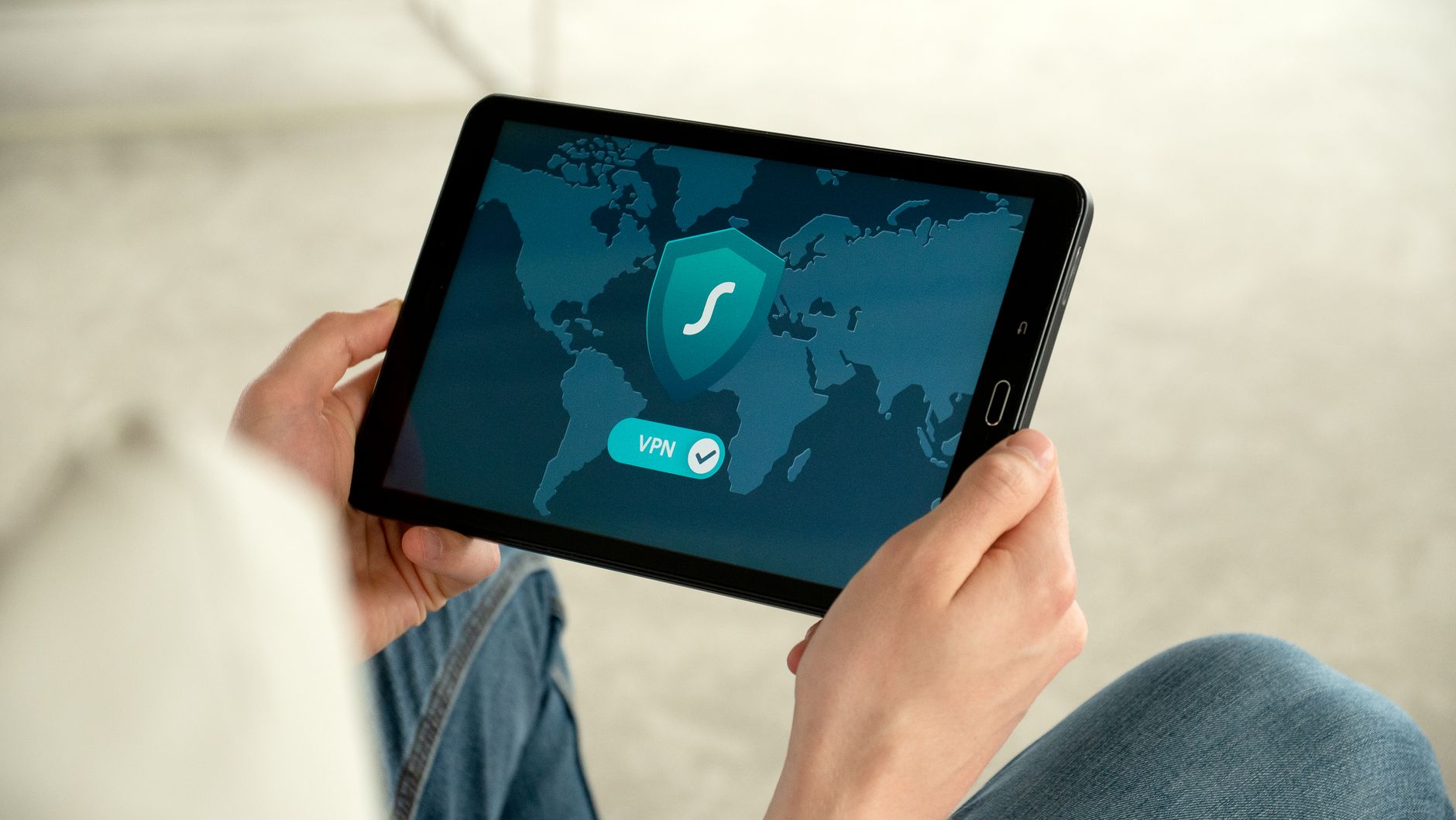
Using a VPN while taking polls masks your real IP address, but introduces a new risk: you’re routing all poll traffic through the VPN provider’s servers, which can now see your responses. A VPN is only as private as the VPN company’s operational practices and privacy policy. ExpressVPN, which has been acquired by a private equity firm, has faced criticism for maintaining logs despite privacy claims; ProtonVPN is run by a company headquartered in Switzerland with stronger data protection laws, but no VPN company can offer absolute anonymity if subpoenaed by law enforcement. The advantage of using a VPN is that it separates your real IP address from the poll platform, meaning the poll platform cannot perform geographic targeting or IP-based re-identification of you later.
Browser fingerprinting can be partially mitigated by using privacy-focused browsers like Tor Browser or by disabling JavaScript on poll pages (though many modern polls require JavaScript to function). Cookie deletion between polls prevents platforms from tracking your participation across multiple surveys on the same site. Private browsing mode (incognito) clears cookies after you close the browser session, but does not hide your IP address. The practical tradeoff is that privacy measures often reduce functionality—Tor Browser is significantly slower than Chrome, and disabling JavaScript breaks many poll interfaces. Using a disposable email address (a temporary inbox service like Guerrillamail or 10MinuteMail) for polls that require email verification prevents the platform from linking the poll to your permanent email identity, though some of these services are themselves operated by data collection companies or are monitored by security researchers.
Data Retention, Deletion, and the Breach Risk Window
Polls that remain in a platform’s database represent an ongoing liability: every day the data exists, there is a nonzero probability the platform will suffer a breach or be compelled by government to surrender the data. Even if a platform claims to delete poll data after a certain period, deletion is not instantaneous. Most platforms use a “soft delete” model where data is marked for deletion but remains on backup tapes and archived databases for months. A study by researchers at the University of Amsterdam found that survey responses marked as deleted on Qualtrics were still accessible in the platform’s backup systems 8 months after deletion was requested.
The legal reality is that you have few enforceable rights to force deletion; the GDPR in Europe provides a “right to be forgotten,” but most U.S.-based platforms can legally ignore deletion requests after a certain period if they claim the data is necessary for their business records. If you create or control a poll (as opposed to merely taking one), the responsibility for protecting respondents’ data falls partially on you. If you collect poll results that include identifying information, you become a data controller under GDPR and must document how the data is stored, who can access it, and how long it will be retained. A warning: if you run a poll on your website and store results in an unencrypted text file on your web server, that data is accessible to any attacker who compromises the server, and you may be liable for failing to implement basic security. The most defensible approach is to use a polling platform that handles encryption and security on your behalf, rather than rolling your own solution.
Legal Frameworks and Government Access to Poll Data
In the United States, law enforcement can compel poll platforms to provide response data through subpoenas, with or without a warrant depending on the specifics of the legal request. The Electronic Communications Privacy Act (ECPA) of 1986 predates modern cloud infrastructure and is interpreted broadly to allow law enforcement access to data stored on servers, particularly if no encryption is used. The distinction between content (your actual poll answers) and metadata (your IP address, timestamp, device info) is meaningless in a subpoena context—law enforcement can demand both.
During the January 6 Capitol riots, the FBI obtained polling and web traffic records from multiple internet service providers and digital media platforms to re-identify individuals who had visited particular websites, visited particular geographic areas, or interacted with specific online communities. The practical reality is that if your poll participation is even slightly politically, religiously, or legally sensitive, you should assume that the data could eventually be obtained by government actors through processes you will never know about. Law enforcement requests for user data are frequently accompanied by nondisclosure orders that prevent the platform from informing users that their data was accessed. Platforms that comply with such orders (which is virtually all major platforms) will never tell you if your poll participation is handed over to investigators.
Cross-Platform Re-Identification and Data Broker Aggregation
The greatest privacy risk from taking polls emerges not from individual breaches but from data broker aggregation. Companies like Acxiom, Experian, and Oracle Data Cloud purchase or scrape poll participation data, social media posts, internet browsing history, and purchase records, then link them all together using probabilistic matching and deterministic identifiers (email addresses, phone numbers, hashed values). If you take a poll about health anxiety on one platform using an IP address, post about the same anxiety on social media using your real name, and then make a purchase related to anxiety treatment while logged into your email, data brokers can connect all three events to a single profile. That profile is then sold to pharmaceutical companies, advertisers, and employers for targeting and decision-making. The mechanism for re-identification across platforms often relies on email addresses as the anchor.
Many polls request email addresses for verification or follow-up, and email addresses are also used as login credentials on hundreds of other websites. A single email address, combined with IP address data from your ISP’s logs and demographic information from public records, is sufficient for data brokers to establish a probabilistic identity. The practical consequence is that even if an individual poll platform claims not to retain data, your participation can be reconstructed from information held by data brokers months or years later. You have limited legal recourse in the United States; data brokers are not required to disclose what information they hold about you, and opt-out requests are voluntary and often non-functional. Some states (California, Virginia, Colorado, Connecticut, Utah) have consumer privacy laws that theoretically allow you to request deletion from data brokers, but enforcement is weak and brokers often re-collect the same data shortly after deletion requests are processed.
- —
Frequently Asked Questions
Does using a VPN make poll responses truly anonymous?
A VPN masks your IP address from the poll platform but not from your VPN provider. You’re trading one organization’s access to your data for another’s. Your VPN provider can still see which poll platforms you visit and when. For true privacy, use a VPN operated by a nonprofit (like Mullvad) or company in a jurisdiction with strong data protection laws (like Proton), and never use a VPN provider that keeps logs.
Can I be identified from a poll even if I don’t provide my name or email?
Yes, through browser fingerprinting and IP address matching. Browsers leak information through font lists, installed plugins, timezone, screen resolution, and JavaScript execution patterns. Data brokers can also cross-reference IP addresses against public records and other datasets to identify individuals with high confidence.
If I delete a poll I created, is the data really gone?
No. Most platforms use soft deletion, meaning data is marked deleted but persists in backups for months or years. You cannot verify that deletion actually occurred. If deletion is critical, request a written confirmation from the platform specifying which backup systems will be purged and when.
Are encrypted polling platforms like Cryptpad actually more private?
End-to-end encrypted polls provide protection against the platform operator reading your responses, but metadata (timing, IP address in some cases, number of responses) is still visible. Encryption protects content but not traffic patterns. For maximum privacy, combine an encrypted platform with a VPN and private browsing mode.
Who can access my poll data if law enforcement issues a subpoena?
Law enforcement can compel the poll platform to provide all data associated with a poll or user account, including responses, metadata, and personal information. The platform may be legally prohibited from notifying you that a subpoena was issued. No technical protection you implement as a poll participant can prevent law enforcement access if the platform is served with a valid subpoena.
How do data brokers find my poll responses?
They purchase or scrape data from platforms, then link it to other datasets using email addresses, phone numbers, and IP addresses as anchors. A single identifying detail (your email address from a poll) can be matched against hundreds of millions of other records to build a complete profile. You have limited legal recourse in most U.S. states to force deletion.
You Might Also Like
- How to Protect Your Source Code Privacy
- How to Protect Your Inbox Privacy Settings
- How to Protect Your Draft Emails Privacy