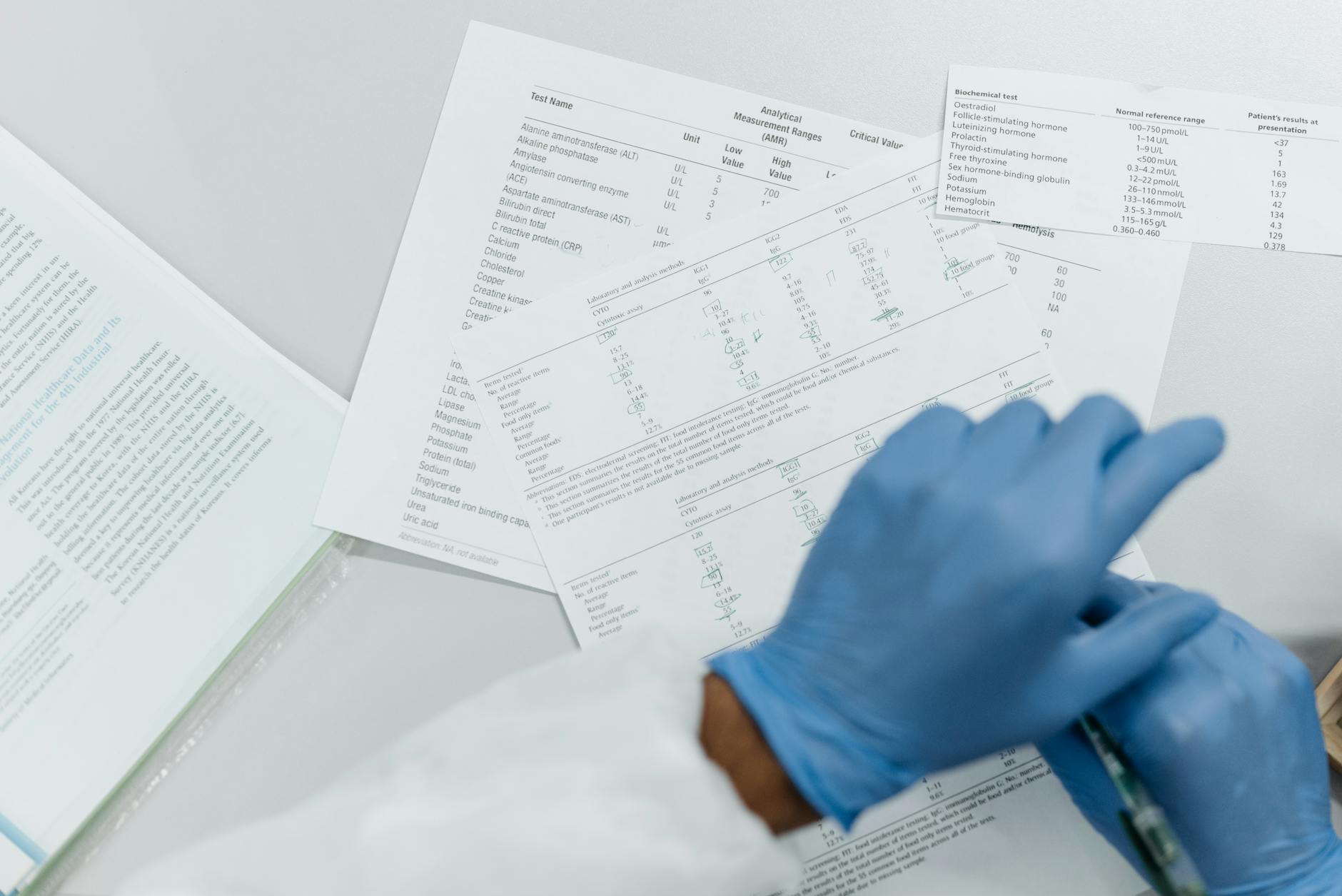
Protecting your lab test results requires understanding who can access them, limiting that access, and monitoring for unauthorized use. Your lab results—including blood tests, genetic screens, and diagnostic reports—contain some of the most sensitive medical information available: your health status, genetic predispositions, and potential vulnerabilities to disease. This data is valuable to identity thieves and cybercriminals because it can be used for medical fraud, insurance denial, blackmail, or sold on the dark web.
In 2023, healthcare organizations reported over 800 data breaches affecting tens of millions of patients, with lab test data among the most targeted records. Protecting this information starts with recognizing that labs, hospitals, insurers, and employers all handle your test results, and each access point represents a potential vulnerability. You cannot rely solely on healthcare providers to secure your data—federal privacy laws like HIPAA set minimum standards but don’t prevent breaches. The most effective protection requires you to take active steps: requesting copies of your own results, reviewing who has access, using secure patient portals, and staying informed about breaches involving your providers.
Table of Contents
- Who Has Access to Your Lab Test Results and Why?
- Understanding HIPAA and the Limits of Lab Data Privacy Law
- Major Data Breaches Involving Lab Test Results
- Practical Steps to Protect Your Lab Results
- Confronting the Tradeoff Between Access and Security
- The Overlooked Risk of Physical Lab Result Documents
- Moving Forward: Monitoring and Breach Response
- Frequently Asked Questions
Who Has Access to Your Lab Test Results and Why?
Your lab results are not private to just you and your doctor. Multiple parties routinely access these records: your healthcare providers and their staff, health insurance companies evaluating claims and setting premiums, employers conducting occupational health screenings, government agencies reviewing public health data, and in some cases, third-party researchers with contractual access. Each of these parties has different motivations and different security standards. An insurance company might access your results to deny coverage; a hospital janitor might see them while moving files; a researcher might de-identify your data but fail to do so properly.
This fragmented access landscape means no single security measure protects your results across all possible handlers. For example, when you visit a lab like LabCorp or Quest, your results are stored in their systems, transmitted to your doctor’s electronic health record, sent to your insurance company, potentially available to your employer’s occupational health department, and may be retained by the lab for years—each copy represents an opportunity for unauthorized access. Some labs retain results indefinitely; others keep them for five years or longer. The problem is that you typically have limited visibility into how long your data is stored and who can access it at any point in time. Many patients are unaware that their results can be accessed by billing departments, quality assurance staff, or even marketing teams (at some facilities) without their explicit permission for each access.

Understanding HIPAA and the Limits of Lab Data Privacy Law
HIPAA, the health Insurance Portability and Accountability Act, is the primary federal law protecting health information, and it does require healthcare providers and insurers to safeguard lab results and notify you of breaches. However, HIPAA’s protections are baseline standards, not airtight security guarantees. The law applies only to covered entities (doctors, hospitals, labs, insurers) and business associates (vendors these entities contract with), but not to non-healthcare companies that obtain your health data through other means. Countless third parties—DNA ancestry companies, health tracking apps, employer wellness programs, and data brokers—operate in gray areas where HIPAA does not apply.
A critical limitation: HIPAA allows healthcare providers to use your information for treatment, payment, and operations without your permission, which means your lab results can be shared within a healthcare system, with your insurer, and with billing agencies without you being explicitly asked each time. If your doctor uses an electronic health record system, your results might be accessible to administrative staff who have no direct role in your care. The law requires written notice of breaches affecting more than 500 people but does not require notification if fewer people are affected, creating a perverse incentive where small breaches may go unreported to patients. Additionally, HIPAA allows health plans to deny coverage based on pre-existing conditions discovered in lab results, and employers can access results from occupational health screenings—protections that are weaker in states without additional privacy laws.
Major Data Breaches Involving Lab Test Results
Several high-profile breaches have compromised millions of lab results, illustrating the real-world risks. In 2021, Insidious exploited a vulnerability in a database used by multiple U.S. labs and healthcare providers, exposing the personal information and lab results of millions of patients. In 2020, a misconfigured AWS server leaked genetic testing data from a major DNA testing company, exposing results that users believed were private. LabCorp itself suffered a breach in 2017 affecting over 250 million Americans, though not all of those records included lab results.
Quest Diagnostics disclosed a breach affecting over 11 million customers in 2019, compromising names, Social Security numbers, and in some cases health information. These breaches typically occur not because of a single point of failure but because of a combination of weak passwords, unpatched software, poor access controls, and inadequate monitoring. The aftermath of a lab data breach extends beyond immediate identity theft. Patients whose genetic or health information has been breached face long-term risks including insurance discrimination (in states where it’s not prohibited), employment discrimination, and stigma if health conditions become known to the public. Some breaches go undiscovered for months or years—LabCorp’s breach, for instance, was not disclosed until a year after it began. The notification process itself is often inadequate; healthcare providers typically send a single notification letter, and customers who no longer have the address on file may never learn they were affected.

Practical Steps to Protect Your Lab Results
The most direct way to protect your lab results is to take possession of them: request electronic copies of all lab work from your healthcare providers and maintain your own secure archive. Under HIPAA, patients have the right to receive copies of their medical records, usually at no charge if requested electronically. Start by contacting your doctor’s office, hospital, and any specialty clinics you visit and asking for digital copies of lab results. Store these copies in an encrypted folder on your computer or in a secure cloud service like ProtonMail’s encrypted storage or Tresorit. Create a personal health record document that lists every lab you’ve had, what was tested, the results, and when—this helps you spot anomalies if an unauthorized person accesses your medical records.
Review your privacy settings and access permissions with each healthcare provider. Many hospital systems and clinic networks offer patient portals where you can see who has accessed your records and restrict sharing. If your results are stored in a shared electronic health record system, ask your healthcare provider which staff members have access by default and request that access be limited to those who are treating you directly. Be cautious about granting access to third-party apps that claim to consolidate your health records; these apps may be less secure than your doctor’s official portal and may sell your data to advertisers or healthcare analytics companies. When you change doctors or move to a new healthcare system, explicitly request that your old records not be sent to new providers unless necessary for treatment—fewer copies of your results in circulation means fewer opportunities for breach.
Confronting the Tradeoff Between Access and Security
Protecting your lab results creates a tension between privacy and practical medical care. Your doctor needs access to your results to treat you effectively; your insurance company needs some information to process claims; your next doctor needs your history to provide appropriate care. Complete information isolation—sharing your results with no one—is impossible and undesirable. The tradeoff is that every additional person or system that accesses your results increases the breach risk. A patient who uses multiple health systems, trusts different specialists, and switches insurance plans will have more copies of their lab results in more databases than someone with a single doctor and one insurance company—convenience comes at the cost of security exposure.
This creates a practical dilemma without a perfect solution. Aggregate your healthcare to as few providers as possible to reduce the number of systems that hold your data, but also ensure those providers are reputable and secure, which may mean choosing a larger, more established healthcare organization over a smaller clinic. Alternatively, compartmentalize your information: keep routine results with your primary doctor but restrict which specialists or insurers access rare or sensitive tests like genetic results or psychiatric evaluations. Be aware that some tradeoffs are one-way: once you authorize genetic testing, you cannot unshare that data if the company is later breached. Ask before consenting whether the lab retains data, how long they retain it, and what they do with it if you die or cancel service.

The Overlooked Risk of Physical Lab Result Documents
While digital security receives most attention, physical copies of lab results in your home, car, or mail pose underestimated risks. If you receive lab results in the mail, a package intercepted by a thief or a roommate could leak sensitive health information. Medical documents left in a car, gym locker, or office desk are accessible to anyone nearby. Healthcare providers sometimes mail results unnecessarily; request that sensitive results be made available only through secure patient portals, not printed and mailed. If you receive printed results, shred them securely using a cross-cut shredder (straight-cut shredding is insufficient because documents can be reassembled).
Store any physical documents in a locked drawer or safe, separate from other important documents like your Social Security card or passport. Many patients underestimate how much sensitive information a lab report contains. A typical result includes your name, date of birth, medical record number, Social Security number, insurance information, and detailed health data—everything an identity thief needs to commit fraud. Unlike digital breaches that affect millions, a physical document in the wrong hands may harm only you, but the harm is directed and personal. If someone obtains a printout of your lab results and your Social Security number, they can open accounts in your name, apply for loans, or claim government benefits. Establish a rule: any document containing medical or financial information should be destroyed immediately once you have a digital backup.
Moving Forward: Monitoring and Breach Response
Protecting your lab results is not a one-time action but an ongoing responsibility. Create a system to monitor for unauthorized access: many healthcare providers now offer alerts when your records are accessed, and some patient portals allow you to see access logs. Review these logs quarterly to identify suspicious access. If your healthcare provider does not offer access monitoring, request it or consider moving to one that does. Register your information with monitoring services like those provided by breached companies (most major breaches offer two years of free credit monitoring and identity theft insurance), though be aware that these services are reactive—they alert you after a breach has already occurred.
If you are affected by a lab data breach, respond immediately. Change passwords for all healthcare accounts and any personal email accounts associated with medical records. Monitor your credit reports for fraudulent activity and place a fraud alert with the credit bureaus. File a police report documenting the breach, which you may need for identity theft claims. Some breaches are so large that individual monitoring becomes impractical, but the broader trend is that healthcare systems are beginning to implement breach detection and notification systems more rapidly. As healthcare becomes increasingly digital, the industry standard is shifting toward real-time breach notification and automated security measures—a development that offers some hope for better protection in the future, though it cannot eliminate the risk entirely.
Frequently Asked Questions
How long can a lab keep my results after I request them?
Labs are required to provide you with copies of your records, but they can retain records themselves for as long as their retention policy allows, often five years or more. You can request that physical records be destroyed, though this typically applies only to your copy, not their archives. Some labs will delete records after a patient dies or requests deletion, but this varies by state and provider.
Can I opt out of sharing my lab results with my insurance company?
No, HIPAA allows health plans to access lab results for payment and coverage decisions without your explicit permission each time. However, you can restrict sharing for non-essential purposes like wellness programs or marketing. Ask your provider which staff members can access your results and request limitations where possible, but understand that your insurer will always need some information to process claims.
Is genetic testing data protected under HIPAA?
Genetic data from a clinical lab is protected under HIPAA, but genetic data from direct-to-consumer companies like 23andMe is not unless the company is operating as a HIPAA-covered entity. Third-party genetic testing services often sell or share data with researchers, law enforcement, and pharmaceutical companies. Carefully review the privacy policy before taking any genetic test, as you may have limited control over how your DNA data is used.
What should I do if I find unauthorized access to my lab results?
Document the unauthorized access with screenshots or printouts, contact your healthcare provider immediately, file a complaint with your state’s health department or the U.S. Department of Health and Human Services Office for Civil Rights, place a fraud alert with the three credit bureaus, and consider consulting an attorney if your information has been used fraudulently.
Can my employer see my lab results?
If your employer ordered occupational health testing (like a drug screen or fitness evaluation), they can access those results. If your lab results are from personal healthcare, your employer cannot access them unless you authorize it. However, some employers require employees to share health information through wellness programs—review any authorization forms carefully before sharing.
How can I tell if my health information has been breached?
Register with the U.S. Department of Health and Human Services breach notification log at hhs.gov/hipaa/breaches, sign up for free credit monitoring offered by breached companies, monitor your credit reports at annualcreditreport.com, and check your healthcare provider’s website for breach notifications. If you suspect your information was breached, contact the healthcare provider and the breached company directly.
You Might Also Like
- How to Protect Your Vision Insurance Records
- How to Protect Your Trash Service Account
- How to Protect Your Title Insurance Information