Protecting your smart meter data privacy requires a multi-layered approach: understanding what data your utility collects, knowing your legal rights, opting out of optional third-party data sharing programs, and verifying that your utility has proper encryption and security controls in place. With 137 million smart meters installed across US homes, representing 82% of all electric meters as of 2025, the scale of smart meter deployment means that vulnerabilities in these devices can affect tens of millions of households simultaneously. Consider the case of a homeowner whose meter readings were compromised: those readings can reveal intimate details about household behavior—when you’re home, your daily routines, and even whether you run sensitive equipment for medical purposes.
The challenge is that many utilities operate these devices with minimal transparency about how your energy consumption data is stored, shared, or protected. While smart meters offer legitimate benefits like real-time usage monitoring and efficient grid management, the granular nature of the data they collect creates genuine privacy risks. Recent research has shown that even anonymized meter data is vulnerable to re-identification attacks, and the underlying technology contains significant security vulnerabilities that could expose your information to both data thieves and utility company misuse.
Table of Contents
- Why Smart Meter Data Privacy Matters More Than You Think
- The Cybersecurity Vulnerabilities Hidden in Your Smart Meter
- How Your Meter Data Can Reveal Your Identity
- Technical Protections: Encryption and Data Obfuscation
- Beyond Privacy: DoS, Grid Instability, and Cascading Failures
- Your Rights and Practical Steps You Can Take
- Regulatory Protections and the Path Forward
Why Smart Meter Data Privacy Matters More Than You Think
Smart meters record your energy consumption at intervals ranging from 15 minutes to hourly, creating a detailed historical record of your household’s electricity usage patterns. Unlike older analog meters that were read once monthly, smart meters generate thousands of data points per year, with over 200 million units in operation across Europe alone. This granular data reveals patterns that go far beyond simple energy consumption—it can indicate whether you’re home, what appliances you use, and even sensitive medical information such as when you’re using dialysis equipment or running oxygen concentrators. The primary concern is function creep and data monetization.
Your utility may collect your data for legitimate operational purposes, but increasingly they’re exploring ways to sell access to third parties including data brokers, marketing companies, and insurance firms. Insurance companies, for instance, could use meter data to identify households that appear to use energy-intensive medical equipment and adjust premiums accordingly. While some utilities have customer opt-out programs, many customers aren’t even aware such programs exist. The difference between utilities that respect privacy and those that don’t can mean the difference between your usage data remaining within your utility’s systems or being packaged and sold to hundreds of third parties.
The Cybersecurity Vulnerabilities Hidden in Your Smart Meter
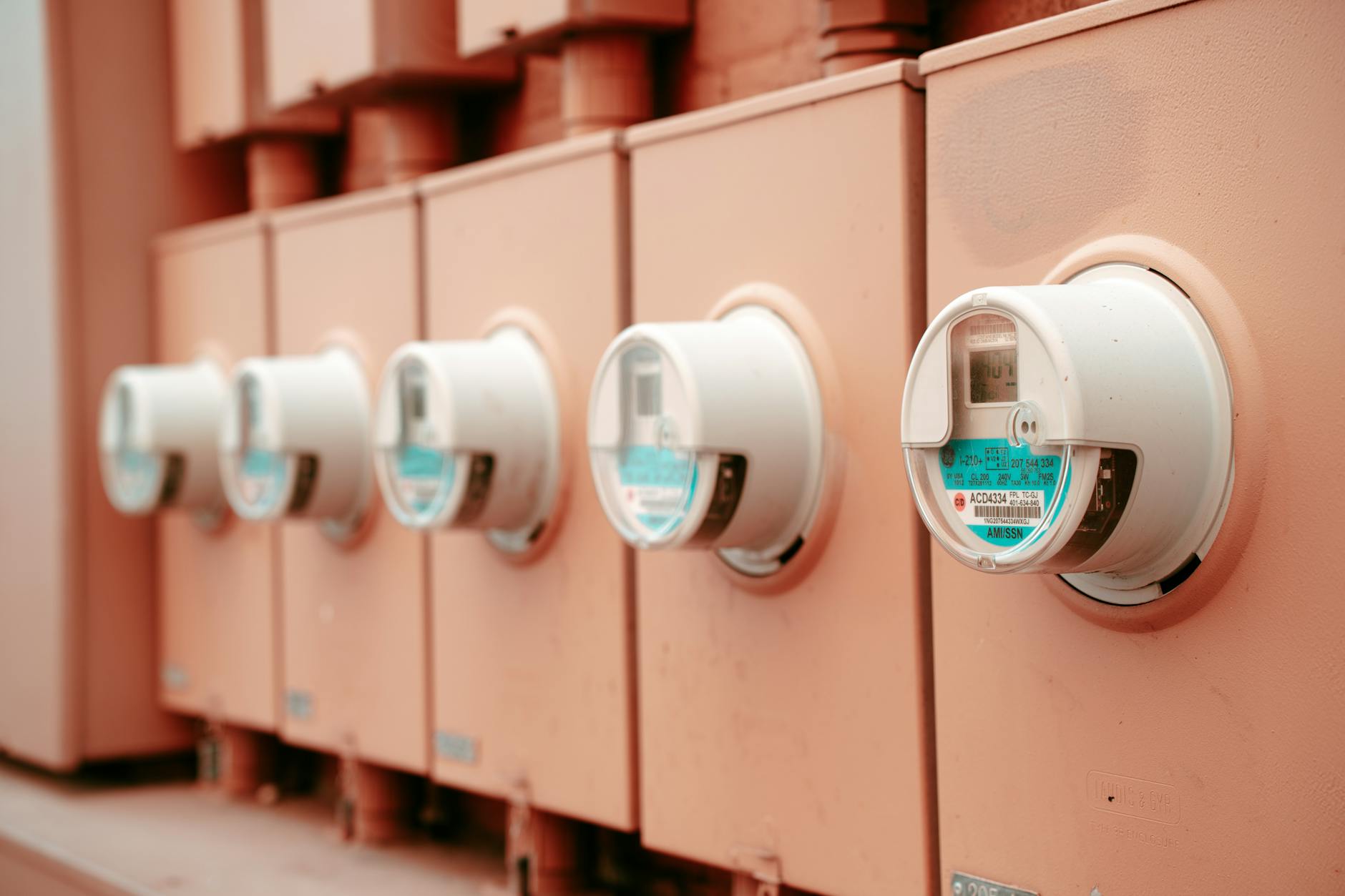
Smart meters contain significant security weaknesses that cybersecurity researchers have documented with alarming frequency. A comprehensive analysis found that 58.33% of identified smart meter vulnerabilities involve privacy leaks, while another 50% involve denial-of-service (DoS) or distributed denial-of-service (DDoS) attack vectors. These vulnerabilities include weak encryption protocols, poor authentication mechanisms, unencrypted data transmission between the meter and utility systems, hardcoded credentials in firmware, outdated communication protocols, and remote code execution flaws that allow attackers to compromise devices remotely.
The danger extends beyond individual privacy concerns to infrastructure stability. Oregon State University researchers demonstrated a chilling vulnerability: they showed that by compromising just 8% of smart meters in a controlled test environment, they could destabilize the power grid and trigger a complete blackout by oscillating the load demand. This means that cybercriminals or hostile foreign actors don’t need to target your meter specifically to cause you serious harm—a large-scale attack on smart meters could disrupt electricity supply across entire regions. The gap between what meter manufacturers claim about their security and what independent researchers find in real-world testing is substantial, with many legacy systems still in operation containing protections that were inadequate even when they were first deployed.
How Your Meter Data Can Reveal Your Identity
Perhaps the most unsettling finding in recent smart meter research involves re-identification risks. A 2025 study published in Scientific Reports demonstrated that researchers could re-identify more than 90% of households in a dataset of 2.5 million half-hourly electric time series using just 5 consecutive meter readings. This means that even if a utility claims to have “anonymized” your data before sharing it with third parties, that anonymization offers almost no real protection. An attacker or data buyer only needs a tiny sample of your actual consumption data to match it to the anonymized dataset and unmask your identity, consumption patterns, and all the behavioral information those readings contain.
This vulnerability creates a cascade of problems. A data broker could match anonymized meter data against other available information about you—your address, your employment records, your purchase history—and create a comprehensive profile of your household’s behavior. This profile could then be sold to marketing firms to target you with extremely specific advertising, to insurance companies to adjust your rates, or even to criminals planning home invasions (identifying homes where valuable equipment is being used or where residents are predictably absent). The re-identification attack requires no sophisticated hacking; it’s a mathematical problem with a known solution, which means this risk is fundamental to how meter data is structured rather than something that better security practices alone can fully address.
Technical Protections: Encryption and Data Obfuscation
The most effective technical safeguard for smart meter data is strong encryption, specifically Advanced Encryption Standard (AES) encryption for protecting data both in transit (from meter to utility) and at rest (stored in databases). However, encryption alone is insufficient. More sophisticated approaches include data obfuscation (rendering specific consumption details less readable while preserving statistical properties), homomorphic encryption (allowing computations on encrypted data without decryption), and secure multiparty computation schemes (enabling multiple parties to calculate results without revealing individual inputs to each other). In practice, the security approach your utility uses depends on regulatory pressure and company priorities.
A utility in a jurisdiction with strong data protection regulations might implement AES encryption, regular security audits, strict access controls, and require explicit user consent for any third-party data sharing. A utility in a less regulated area might use outdated encryption, allow automatic data sharing, and minimize security spending. The tradeoff here is real: stronger encryption and security controls require infrastructure investment, which utilities may pass along to customers through higher rates. Additionally, some advanced protection schemes like homomorphic encryption have computational overhead that makes real-time grid optimization more challenging. The question utilities face—and that regulators should be asking—is whether those tradeoffs are worth the privacy protection, and for most advocates, the answer is clearly yes given the risks involved.
Beyond Privacy: DoS, Grid Instability, and Cascading Failures
While the privacy leakage risk affects individuals directly, the denial-of-service vulnerabilities in smart meters pose a threat to everyone on the grid. The 50% of smart meter vulnerabilities that involve DoS or DDoS attacks are particularly concerning because a successful attack doesn’t just steal data—it can disrupt the normal functioning of the electrical grid itself. Researchers have demonstrated that compromised meters can be instructed to rapidly fluctuate their power draw in coordinated patterns, creating demand shocks that destabilize the grid’s frequency and voltage regulation. The cascading failure scenario is worth understanding because it shows the real-world stakes.
If a cyberattack compromises thousands of smart meters and triggers a blackout, hospitals lose power, traffic signals fail, water systems that depend on electrical pumps shut down, and economic losses mount into the millions of dollars per hour. Individual consumers suffer the immediate effects—spoiled food, lost work, medical equipment failures for people on home medical support. The vulnerability exists not because smart meter designers wanted to include attack vectors, but because these devices were developed under cost pressures and deployed before adequate security testing became standard. The hardcoded credentials and outdated protocols found in many existing meters are the legacy of this development culture, and they won’t be addressed until every meter reaches end-of-life and is replaced, a process that will take decades.
Your Rights and Practical Steps You Can Take
The Federal Trade Commission and various state utility commissions have established consumer rights around smart meter data, though these rights vary significantly by location. At a minimum, you should know that you generally have the right to request information about what personal data your utility collects and retains, to access your own meter data, to correct inaccurate information, and to understand with whom your utility shares your data. Many utilities offer opt-out programs for third-party data sharing, though these are often not automatically enrolled and may require you to actively request them—sometimes in writing. Start by reviewing your utility’s privacy policy, which should be available on their website or by request.
Look specifically for information about data retention periods, whether data is shared with third parties, whether there are opt-out mechanisms, and what security measures protect your data in transit and storage. If your utility doesn’t clearly explain these practices, contact them directly and request a detailed explanation. Document your requests and responses. If your utility offers optional data sharing programs, opt out unless you have a specific reason to participate. If opt-out options aren’t available, that’s valuable information to share with your state utility commission or public utility board, as regulatory pressure is one of the most effective drivers of change in utility data practices.
Regulatory Protections and the Path Forward
Forward-thinking utility regulators and privacy advocates have identified several best practices that should be standard across all smart meter deployments. These include mandatory customer opt-out policies (or better yet, opt-in policies requiring explicit consent for any third-party sharing), strict data sampling and sharing guidelines that limit what third parties can access, requirements that data be stored independently from utilities to prevent abuse of access, and governmental enforcement authority to investigate privacy violations and impose penalties. The regulatory landscape is shifting, with several states and European countries implementing stricter smart meter privacy rules. However, this patchwork of regulations means protection varies dramatically depending on where you live.
Some states treat smart meter data as private customer information protected under utility privacy statutes, while others treat it as fair game for monetization. The 137 million smart meters across the US represent 137 million privacy experiments happening simultaneously, with some utilities choosing transparency and strong protection while others minimize disclosure and maximize data monetization. As these systems age and new vulnerabilities continue to emerge, expect regulatory pressure to increase. The question isn’t whether privacy protections for smart meter data will become stronger—it’s whether that will happen through proactive regulation or only after a major breach or cyberattack forces action.
You Might Also Like
- What to Do If Your Attorney Client Data Is Exposed
- Signs Your Appraisal Data Has Been Exposed
- What to Do If Your Landlord Database Is Hacked