

To protect your fitness tracker data, start by enabling two-factor authentication on your fitness app accounts, disabling location tracking when not actively needed, and turning off features you do not use to minimize the data your device collects. These three steps alone can significantly reduce your exposure if your fitness tracker company experiences a breach. Consider the 2021 GetHealth incident, where 61 million fitness tracker records from Apple and Fitbit users were exposed in an unsecured database discovered by security researcher Jeremiah Fowler. That breach revealed names, birth dates, weight, height, gender, and GPS geolocation data””information that could enable identity theft, stalking, or insurance discrimination. The stakes are higher than most people realize.
Healthcare data sells for up to $250 per record on the dark web, compared to just $5.40 for credit card information. With over one billion users now wearing devices that track steps, sleep, heart rate, and other personal metrics, fitness trackers have become a lucrative target. A recent survey found that 74 percent of respondents are concerned about how their wearable devices handle personal data, yet many continue using default settings that maximize data collection. This article covers the specific vulnerabilities that make fitness trackers risky, the legal protections available to you, and practical steps to secure your data. We will also examine when local storage makes sense, how to evaluate privacy-focused alternatives, and what the regulatory landscape means for your rights as a consumer.
Table of Contents
- Why Is Fitness Tracker Data Valuable to Hackers and Third Parties?
- Technical Vulnerabilities in Wearable Devices
- The Legal Landscape: What Protections Actually Exist?
- Practical Steps to Minimize Data Collection and Exposure
- Privacy-Focused Alternatives and Local Storage Options
- When Default Settings Work Against You
- The Future of Fitness Tracker Privacy
- Conclusion
Why Is Fitness Tracker Data Valuable to Hackers and Third Parties?
Fitness tracker data is far more revealing than it might appear at first glance. Beyond simple step counts, these devices collect heart rate variability, sleep patterns, menstrual cycles, GPS routes, and in some cases, blood oxygen levels and stress indicators. This information can reveal when you leave for work, your regular running routes, signs of pregnancy before you know yourself, and even early indicators of medical conditions. For criminals, this data enables everything from targeted phishing attacks to physical stalking. For data brokers, it feeds algorithms that influence insurance premiums and employment decisions. The financial incentive is substantial.
While stolen credit card numbers sell for a few dollars each, medical and health records command premium prices because they cannot be easily changed like a password or cancelled like a credit card. In 2025 alone, 605 healthcare breaches were reported to the Department of Health and Human Services, affecting 44.3 million Americans. The Change Healthcare attack that year affected 193 million people, making it the worst healthcare breach in history. Fitness tracker data, while not always classified as medical data, contains similar sensitive information. Employers and insurers represent another category of interested parties. Some wellness programs offer discounts for sharing fitness data, but the long-term implications of this trade remain unclear. Data shared today could influence coverage decisions years from now, particularly as machine learning makes it easier to identify health risks from seemingly innocuous patterns.
Technical Vulnerabilities in Wearable Devices
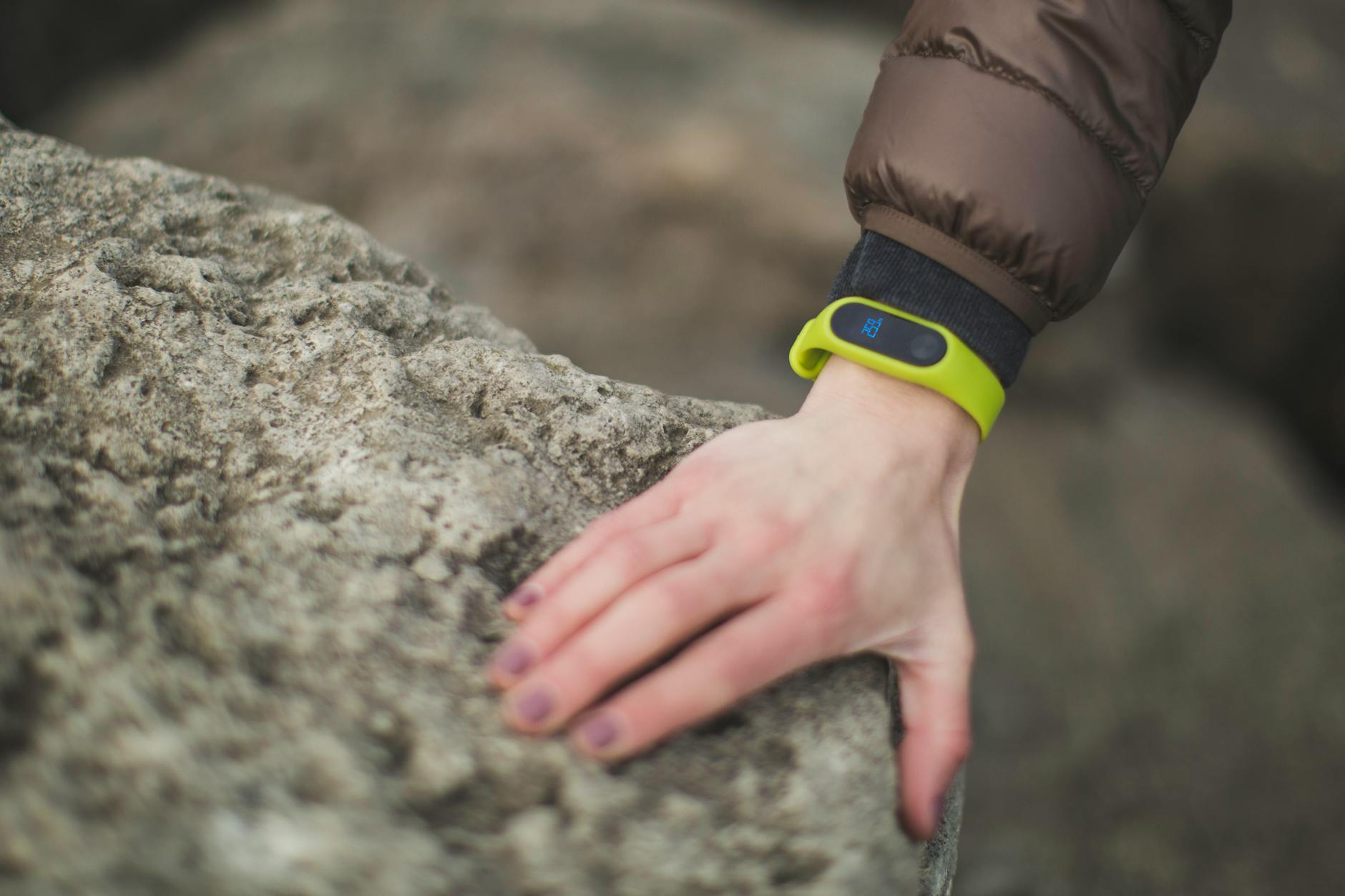
Many wearable devices suffer from weak encryption, insecure Bluetooth protocols, and limited capacity for security updates. Unlike smartphones, which receive regular patches, fitness trackers often run on minimal hardware that manufacturers stop supporting within a few years. This creates a growing population of devices with known vulnerabilities that will never be fixed. The Bluetooth connection between your tracker and phone is particularly problematic””older Bluetooth versions can be intercepted by attackers within range, potentially capturing the data your device transmits. The cloud infrastructure that stores your fitness data presents another attack surface. The GetHealth breach that exposed 61 million records occurred not because of sophisticated hacking but because a database was left accessible without a password.
TechTarget reported that the exposed data included first and last names, display names, dates of birth, weight, height, gender, and GPS geolocation””all sitting unprotected on the internet. This is not an isolated incident; misconfigured cloud storage has caused numerous data exposures across the technology industry. However, not all devices carry equal risk. Higher-end trackers from established companies generally receive longer software support and use more robust encryption. The tradeoff is that these companies also tend to collect more data and integrate with larger ecosystems that increase your exposure. A basic pedometer that stores data only locally might be more secure than a feature-rich smartwatch connected to multiple cloud services, even if the smartwatch has better encryption.
The Legal Landscape: What Protections Actually Exist?
Consumer wearable companies are generally outside the scope of HIPAA in the United States, even when collecting data similar to medical information. This is a critical distinction that surprises many users. HIPAA only applies once wearable data is passed to a healthcare provider””your personal Fitbit account does not fall under its protections. This means that fitness tracker companies face far fewer restrictions on how they store, share, and sell your data compared to your doctor’s office. GDPR in Europe and CCPA in California provide some protection for wearable users, including rights to access your data, request deletion, and opt out of certain data sales. Under GDPR, companies must obtain explicit consent before collecting health-related data and must implement appropriate security measures.
California residents can request that their data not be sold to third parties. These regulations represent meaningful protections, but they require users to actively exercise their rights through formal requests. There is no coherent global legal framework governing wearable security and fitness tracker data. If you use a device manufactured in one country, with servers in another, while living in a third, determining which laws apply becomes complicated. Companies often structure their operations to minimize regulatory exposure, processing data in jurisdictions with weaker privacy laws. The practical result is that legal protections vary dramatically depending on where you live, where your data is stored, and whether you take the initiative to invoke your rights.

Practical Steps to Minimize Data Collection and Exposure
Data minimization is your most effective defense. Turn off features you do not actually use””if you only care about step counting, disable heart rate monitoring, sleep tracking, and GPS. Every feature you enable is additional data that could be exposed in a breach or sold to third parties. Review your app’s permissions regularly; many fitness apps request access to contacts, photos, and other information unrelated to their core function. Deny these requests. Disable location tracking when not actively needed, especially indoors. Many users leave GPS enabled at all times out of convenience, generating a detailed record of their movements that serves little purpose for most fitness goals.
If you want to track a specific outdoor run or bike ride, enable GPS for that activity and disable it afterward. This approach gives you mapping data when you want it without creating a comprehensive surveillance log of your daily life. Enable two-factor authentication on your fitness app accounts. This single step prevents the most common attack vector: compromised passwords. Even if your password appears in a data breach from another service, attackers cannot access your fitness account without the second factor. Use an authenticator app rather than SMS when possible, as text messages can be intercepted through SIM swapping attacks. The minor inconvenience of entering a code during login is trivial compared to the difficulty of recovering from identity theft.
Privacy-Focused Alternatives and Local Storage Options
Consider apps like Gadgetbridge that store data locally on your device rather than uploading it to company servers. These open-source alternatives work with many popular fitness trackers and bands, intercepting the data before it reaches manufacturer servers. The tradeoff is reduced convenience””you lose cloud backup, cross-device synchronization, and some social features. You also take responsibility for backing up your own data, which requires more technical knowledge than simply trusting a company’s infrastructure. Storing data locally when possible rather than on company cloud servers eliminates entire categories of risk. A company cannot lose data it never had. However, local storage has limitations.
If your phone is lost or damaged, you lose your fitness history. You cannot easily share data with healthcare providers or participate in challenges with friends. For users who value these features, the goal becomes finding companies with strong security practices rather than avoiding cloud storage entirely. Using a VPN can encrypt and reroute your data for added anonymity, particularly when syncing your fitness tracker over public WiFi networks. This prevents network-level eavesdropping but does not protect against breaches at the fitness company’s servers. A VPN is one layer of a broader security strategy, not a complete solution. Be aware that some fitness apps may not function correctly through VPNs, and free VPN services often have their own privacy problems.

When Default Settings Work Against You
Fitness apps are designed to encourage maximum data sharing, and their default settings reflect this priority. Social features that share your activities with friends, leaderboards that display your performance publicly, and integrations with other apps all increase engagement while expanding your attack surface. After installing a new fitness app, spend time reviewing every setting rather than accepting defaults. Look specifically for options related to data sharing, social visibility, and third-party integrations. The “sync everything” mentality creates particular problems for fitness data. Many users connect their fitness trackers to multiple services””their health insurance wellness program, their employer’s fitness challenge, their smartwatch ecosystem, and various third-party apps. Each connection multiplies the places your data exists and the entities that could experience a breach.
Before authorizing any new integration, consider whether the benefit justifies the additional exposure. In many cases, manually entering summary data achieves the same goal with far less risk. Warning: deleting your account may not delete your data. Many fitness companies retain data for extended periods even after account closure, citing legal requirements or analytics needs. Before closing an account, use any available data export features to understand what information exists, then explicitly request deletion under applicable privacy laws. Follow up to confirm the deletion was completed. Some users have discovered their data persisting months after they thought they had closed their accounts.
The Future of Fitness Tracker Privacy
The regulatory environment is shifting toward stronger protections, though progress is uneven. Several states are considering comprehensive privacy legislation modeled on CCPA, and the European Union continues to strengthen GDPR enforcement. Major fitness tracker manufacturers have faced enough negative publicity from breaches that security is becoming a competitive differentiator. Some newer devices advertise on-device processing and minimal cloud storage as selling points.
Technical approaches are also evolving. Differential privacy, federated learning, and homomorphic encryption offer ways to derive insights from fitness data without exposing individual records. These technologies remain primarily in research phases for consumer devices, but they suggest a future where fitness tracking need not require trusting companies with raw personal data. Until these approaches mature, the practical advice remains unchanged: minimize what you share, secure what you must share, and stay informed about breaches affecting services you use.
Conclusion
Protecting your fitness tracker data requires active effort because the current ecosystem is designed around data collection, not data protection. Enable two-factor authentication, disable unnecessary features, review privacy settings after every app update, and consider whether cloud storage is truly necessary for your goals. These steps will not make you invulnerable, but they significantly reduce your exposure when””not if””a breach occurs.
The 61 million records exposed in the GetHealth breach and the 44.3 million Americans affected by healthcare breaches in 2025 demonstrate that these risks are not theoretical. Your fitness data is more valuable and more revealing than credit card numbers, yet it often receives less protection. Take control of what you can control, demand better from the companies whose products you use, and stay informed as both threats and protections continue to evolve.