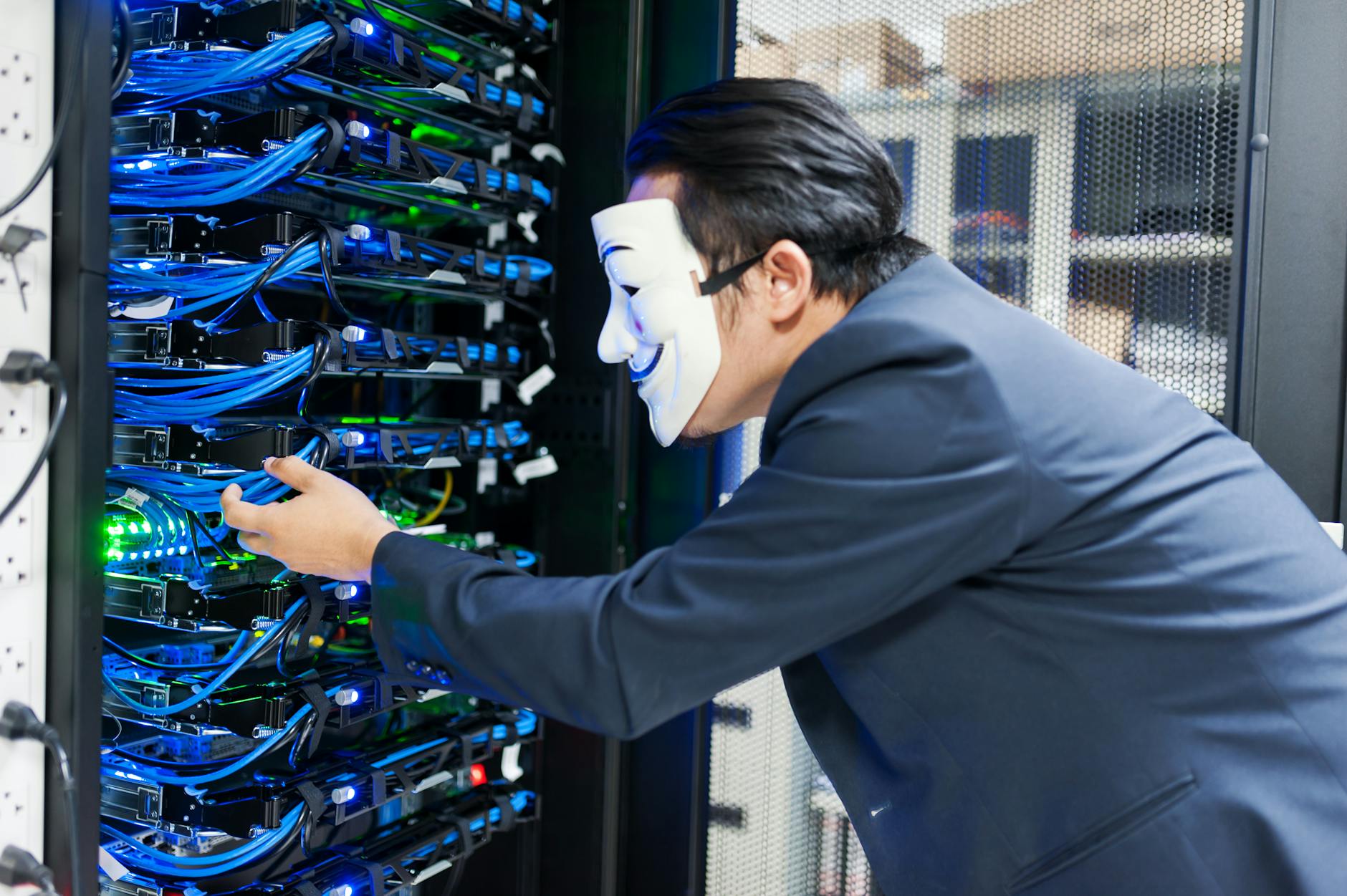
Business breaches expose a wide range of sensitive information that can be categorized into personal data, financial information, and proprietary business records. The specific information exposed depends on what systems were compromised and what data the company stored, but most breaches reveal some combination of customer personal information (names, addresses, dates of birth), authentication credentials, payment details, and internal business documents. When Target was breached in 2013, attackers accessed 40 million credit card numbers along with names, addresses, phone numbers, and email addresses from 70 million customer records, demonstrating how a single breach can compromise multiple categories of data simultaneously.
The scope of what gets exposed often exceeds what companies initially understand. Attackers frequently gain access to far more than the data stored in the primary target system—they can move laterally through networks to access backup systems, archived data, and interconnected databases that may contain years of accumulated records. This means a breach discovered in one area of a company’s operations may have already compromised information across dozens of interconnected systems.
Table of Contents
- What Personal Data Gets Exposed in Business Breaches?
- Financial and Payment Information in Breaches
- Business and Proprietary Information Exposure
- How Attackers Use Exposed Data
- Regulatory Records and Sensitive Documentation
- Authentication Credentials and Access Mechanisms
- Emerging Data Categories and Future Breach Impacts
What Personal Data Gets Exposed in Business Breaches?
Personal identifying information is among the most commonly exposed data in business breaches. Names, addresses, phone numbers, email addresses, and dates of birth are nearly always captured when customer databases are compromised. Social Security numbers, driver’s license numbers, and passport information are also frequently exposed, especially in breaches affecting financial institutions, healthcare providers, and government agencies.
The Equifax breach in 2017 exposed Social Security numbers for 147 million people, along with dates of birth, addresses, and in some cases driver’s license numbers—creating a near-complete identity theft toolkit for attackers. What makes personal data breaches particularly dangerous is that this information doesn’t have an expiration date. A Social Security number stolen in 2020 can be used fraudulently for decades, and addresses and dates of birth remain useful for identity theft and social engineering attempts indefinitely. Unlike a credit card number that can be cancelled and replaced, personal identifiers are permanent and cannot be easily changed, making the damage from personal data breaches long-lasting and difficult to remediate.

Financial and Payment Information in Breaches
Payment card data is one of the most targeted types of information in business breaches because it has immediate monetary value. Credit card numbers, debit card numbers, expiration dates, and CVV codes are stolen directly or through Point-of-Sale (POS) malware that captures transaction data in real time. The Marriott hotel breach, discovered in 2018, compromised payment card information for millions of guests along with passport numbers and email addresses—affecting both leisure and business travelers over a multi-year period.
However, it’s important to understand that modern payment systems have some protective limitations. The Payment Card Industry Data Security Standard (PCI DSS) requires that sensitive authentication data like CVV codes cannot be stored after authorization, which limits what attackers can fully utilize from stored payment data. Additionally, the shift toward tokenization and chip technology has reduced the usefulness of older stolen card numbers. That said, the personal information associated with those cards (names, addresses) remains valuable for fraud and identity theft regardless of PCI protections, and any card number exposure still creates operational headaches requiring emergency cancellation and reissuance.
Business and Proprietary Information Exposure
Beyond customer data, breaches frequently expose internal business information that can damage the company and create secondary risks for customers and partners. Business emails, confidential communications, intellectual property, product development plans, vendor contracts, and strategic documents are often accessible once attackers gain network access. The 2020 SolarWinds supply chain attack compromised the networks of government agencies and Fortune 500 companies, potentially exposing classified communications and strategic plans alongside customer data.
Employee information is also commonly exposed in breaches, including staff directories, employment records, compensation information, and performance reviews. This creates risks for employees who may become targets for harassment, social engineering, or identity theft. Furthermore, exposed vendor lists and partner information can expose third parties to security risks and social engineering attacks even if they weren’t direct targets of the breach.
How Attackers Use Exposed Data
The use of stolen data follows predictable patterns once breaches occur. Immediate attacks often target financial accounts through direct fraud (using stolen payment cards or attempting account takeover using exposed credentials). Identity theft follows quickly, with attackers using personal information to open new accounts, apply for credit, or file fraudulent tax returns.
Healthcare data is particularly valuable because it includes information needed to commit medical identity theft and to obtain prescription medications or medical services fraudulently. In the longer term, exposed personal information is compiled into “fullz” (complete identity packages) and sold on the dark web to other criminals who may use the information months or years after the initial breach. Exposed credentials are tested against other websites (a technique called credential stuffing) to compromise accounts on unrelated services. This means that a breach from one company can create cascading security problems across an individual’s entire digital life, which is why data breaches have compounding effects that extend well beyond the initial compromised service.
Regulatory Records and Sensitive Documentation
Many business breaches expose information that triggers regulatory consequences beyond the immediate data loss. Healthcare providers expose Protected Health Information (PHI), which is protected under HIPAA. Financial institutions expose information covered by Gramm-Leach-Bliley Act (GLBA) protections. Educational institutions expose FERPA-protected student records.
These regulatory violations can result in substantial fines, mandatory notification, and forced security improvements, even when the stolen data itself isn’t actively exploited by attackers. A significant limitation in breach response is that companies often don’t know the full extent of what was compromised until weeks or months after discovery, and sometimes not even then. Attackers may have accessed data without triggering obvious alerts, or may have exfiltrated information so slowly that logs don’t clearly show what was taken. This uncertainty creates a warning for breach victims: assume that if attackers had access to a system, they likely accessed and copied sensitive information even if companies can’t immediately confirm what was taken.
Authentication Credentials and Access Mechanisms
Stolen usernames, passwords, and authentication credentials are immediately useful to attackers in ways that personal information takes time to exploit. Exposed credentials can be used to access active accounts, modify systems, plant persistent malware, or steal additional information beyond what was compromised in the initial breach.
The 2013 Adobe breach exposed user credentials for 153 million accounts, allowing attackers to attempt access to other services where users had reused the same credentials. Multi-factor authentication significantly reduces the usefulness of stolen credentials—an attacker with only a password and username typically cannot access an account protected by MFA, which is why organizations that implement strong authentication see fewer account compromises after breaches. However, the warning is that many users still don’t enable MFA, and even companies that require it internally may not extend the protection to customer accounts.
Emerging Data Categories and Future Breach Impacts
As companies collect more sophisticated data about customers, future breaches will expose information that creates novel harm categories. Biometric data (fingerprints, facial recognition templates), behavioral tracking information, location history, and health data are increasingly stored in company databases and represent new frontiers for breach impacts.
The 2023 MoneyLion breach exposed Social Security numbers, but also fitness and health data, demonstrating how modern companies aggregate sensitive information beyond traditional customer records. Artificial intelligence and machine learning systems trained on customer data have added another dimension to breach risk: if the training data itself is compromised, the models and their outputs may also leak information about individuals in the training set. This represents a forward-looking risk that companies and regulators are just beginning to understand, and means that future breaches may have impacts we can’t yet fully quantify.
You Might Also Like
- What Information Do Entertainment Breaches Expose
- What Information Do Communication Breaches Expose
- What Information Do Social Media Breaches Expose