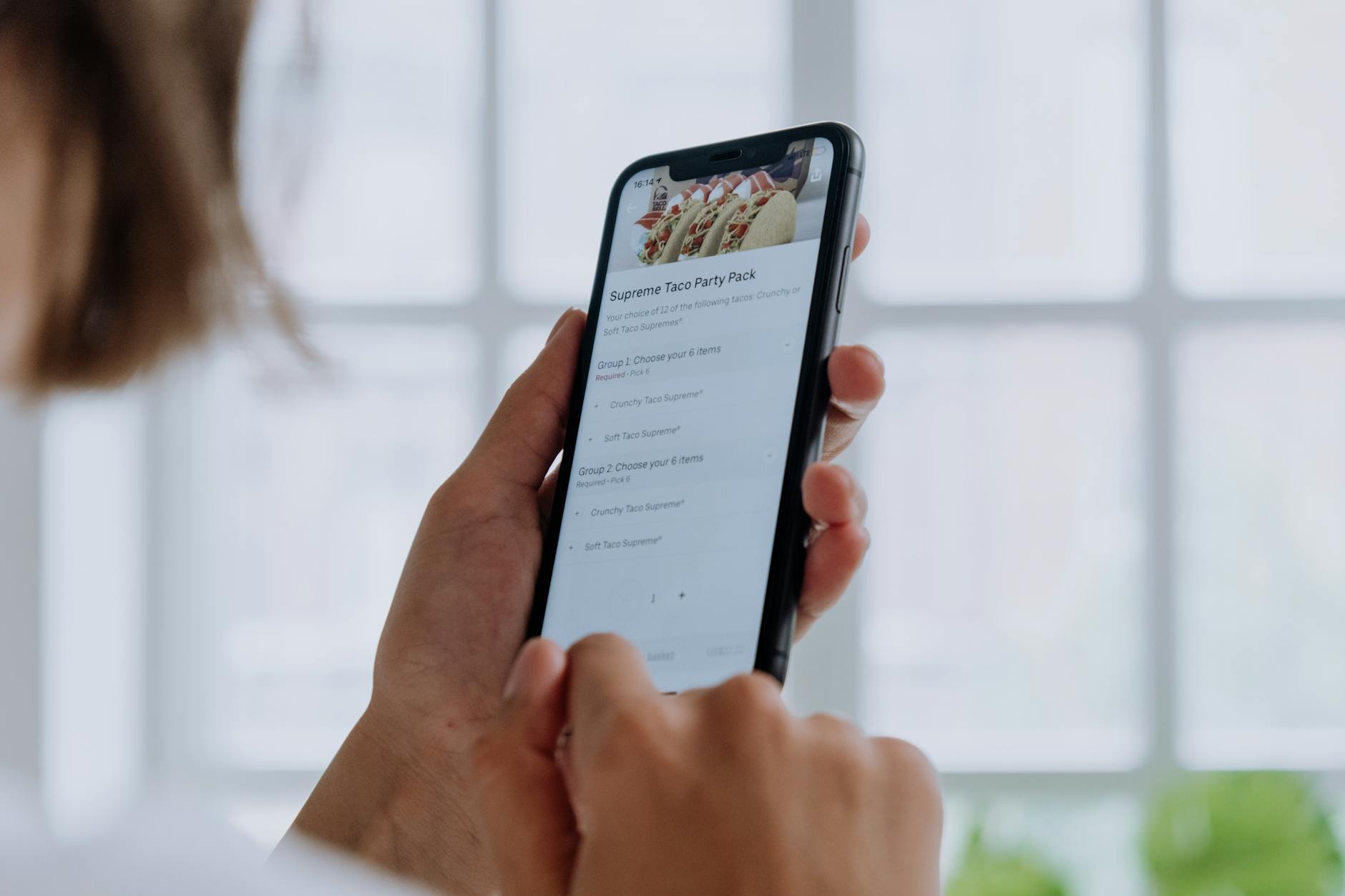
Securing your catering order information means protecting sensitive data at every step: from when you enter payment details on a website or phone, through order processing, to delivery. The core strategy involves using end-to-end encryption for credit card data, requiring vendors to use PCI-compliant payment processors rather than storing card information themselves, and ensuring that catering companies implement multi-factor authentication across their systems. In January 2024, Yum! Brands—which operates KFC, Pizza Hut, and Taco Bell—fell victim to a ransomware attack that forced temporary closures at UK locations, exposing the real-world consequences of weak security infrastructure. When you place a catering order, your personal information (name, address, phone number), payment details, and order preferences move through multiple systems, each representing a potential vulnerability if not properly protected.
The stakes are significant. A 2024 report found that 62% of consumers worry about data breaches when using restaurant services, with their primary concerns centered on stolen payment information, account takeovers, and compromised loyalty rewards points. The financial impact of restaurant-specific breaches is substantial: while the average data breach cost reached $4.88 million in 2024, restaurant industry breaches can exceed $100 million when factoring in regulatory fines, legal settlements, operational disruption, and reputation damage. Understanding how to protect your information—and knowing what security measures catering companies should have in place—is essential in an industry increasingly targeted by cybercriminals.
Table of Contents
- Why Catering Order Data Attracts Cybercriminals
- Understanding Payment Security & PCI DSS Compliance
- Employee Access Control & Internal Security Threats
- Protecting Your Personal Information Through MFA & Account Security
- Phishing, Ransomware & Credential Harvesting Attacks
- Regulatory Compliance & GDPR Fines
- The Future of Restaurant & Catering Security
- Frequently Asked Questions
Why Catering Order Data Attracts Cybercriminals
Catering businesses are attractive targets for hackers because they handle multiple streams of valuable data simultaneously: payment information, customer contact details, dietary preferences, and corporate event schedules. When you order catering for a wedding, corporate event, or party, you’re providing details that criminals can monetize directly through payment card fraud, or indirectly by selling information on the dark web. The 2024 Panda Restaurant Group breach illustrates how internal systems can be compromised; unauthorized attackers gained access to systems containing not only employee data but potentially customer information tied to those accounts. Smaller catering companies often lack the security infrastructure of larger restaurant chains, making them easier targets for attackers using automated vulnerability scanning and credential harvesting techniques.
The risk extends beyond payment data to identity theft. When catering companies collect phone numbers, email addresses, and delivery addresses, they’re gathering the foundation for social engineering attacks. A criminal with your contact information can call your bank impersonating you or your catering company, potentially gaining access to accounts or credit lines. Many catering platforms also store customer preferences and dietary restrictions, which seem innocuous but can reveal personal health information that insurance companies, employers, or identity thieves find valuable. The aggregation of data across multiple catering orders over time creates a detailed profile of your personal life—where you celebrate, when you’re away from home, who your professional contacts are.
Understanding Payment Security & PCI DSS Compliance
Payment Card Industry data Security Standard (PCI DSS) 4.0 became mandatory for all organizations processing credit cards as of 2024, and it introduced stricter requirements that directly affect how catering companies handle your payment information. The new standard requires multi-factor authentication (MFA), stricter identity management, and stronger network security controls. Legitimate catering companies should never store your full credit card number on their servers; instead, they use tokenization—a process where your actual card details are replaced with a unique token that has no value if stolen. When you see a catering website accept your payment through third-party processors like Stripe, Square, or PayPal, this separation of payment processing is exactly what PCI DSS compliance demands.
The limitation of PCI DSS compliance is that it focuses primarily on credit card data, not the broader personal information you provide when ordering catering. A catering company can be fully PCI DSS compliant while still storing your home address, phone number, and event details on an unencrypted server vulnerable to breach. End-to-end encryption should extend to all customer data, not just payment information. When evaluating a catering service, verify that they explicitly state their use of encryption for data in transit and at rest. Ask whether they use third-party payment processors or store card data internally; if they store it internally, they should be able to explain their PCI DSS Level 1 certification (the highest standard) and provide documentation of regular security audits.
Employee Access Control & Internal Security Threats
One of the most overlooked vulnerabilities in catering company security is insufficient access controls—the practice of allowing employees unrestricted access to customer databases. Role-based access controls (RBAC) should limit which employees can view sensitive customer information. Your delivery driver shouldn’t have access to payment data from previous catering orders; your caterer’s accounting staff shouldn’t be able to view dietary information for corporate events. The Panda Restaurant Group breach in 2024 demonstrated how compromised employee credentials can expose not just current customer data but historical records going back years. If an attacker gains access to a single employee account through phishing, and that employee has broad access permissions, the attacker inherits all of those permissions.
Phishing remains the primary attack vector against catering businesses. An email that appears to come from your catering company’s IT department, asking employees to “re-verify your credentials” on a fake login page, can compromise dozens of employee accounts simultaneously. Once inside, attackers look for customer databases, payment processing systems, or archived order information. Regular staff training on GDPR requirements, phishing recognition, and social engineering threats is essential—and mandatory in Europe—but many catering companies still lack comprehensive cybersecurity training programs. The warning here is clear: even well-intentioned catering businesses may not have trained their staff adequately, leaving their systems vulnerable to credential harvesting attacks that specifically target employees.
Protecting Your Personal Information Through MFA & Account Security
Multi-factor authentication (MFA) adds a critical second verification step when you log into a catering company’s website or app—typically a code sent to your phone, a biometric scan, or an authentication app. If a criminal steals your password through a phishing attack or credential database breach, they still cannot access your account without this second factor. However, most catering platforms do not yet require or even offer MFA for customer accounts. This is a significant gap in security posture. When you create an account with a catering company, use a unique, complex password that you don’t reuse across other services; if that catering company is breached, reusing passwords means your email, banking, and social media accounts could be compromised simultaneously.
The tradeoff with MFA is that it adds friction to the ordering process. Some catering platforms avoid implementing it because it complicates the user experience and may reduce customer conversion rates. This is a poor tradeoff: the convenience of faster ordering is far outweighed by the risk of account takeover. When you enter personal information for a catering order, assume it will eventually be breached—not because catering companies are uniquely incompetent, but because every industry experiences breaches over time. Use a separate email address for catering orders if possible, or at minimum monitor that account for suspicious activity. Consider using a virtual credit card number (offered by many banks and credit card companies) that generates a unique card number for a single transaction; this prevents the catering company from storing a card number that can be used for future fraudulent charges.
Phishing, Ransomware & Credential Harvesting Attacks
IBM’s analysis of cyberattacks against the restaurant industry identified phishing, ransomware, and credential harvesting as the primary attack methods, with most attacks targeting employee email accounts and Point-of-Sale (POS) systems first. A catering company’s POS system—the register where in-person orders are taken and payments are processed—is an attractive target because it’s often connected to payment processing systems and customer databases. Once ransomware infects a POS system, attackers can lock down the entire network, demand payment, and threaten to publish customer data. The impact extends beyond the catering company to customers; during the ransomware lockdown, customer data is typically at maximum risk while the company scrambles to respond.
The warning for customers is that ransomware attacks at catering companies often occur without immediate public disclosure. You might not learn that your information was compromised for weeks or months after the attack occurred. Some catering companies face regulatory pressure (under GDPR, California’s CCPA, or other privacy laws) to notify customers of breaches within 30-60 days, but this timeline still leaves a significant window where criminals have unauthorized access to your data. Be aware of monitoring services offered by the catering company after a breach disclosure; take advantage of free credit monitoring and identity theft protection offered as part of breach settlement obligations. The most proactive defense is requesting confirmation of how the catering company secures customer data before placing an order, and avoiding catering services that cannot articulate their security practices.
Regulatory Compliance & GDPR Fines
If you live in Europe or order catering from European companies, GDPR (General Data Protection Regulation) compliance is mandatory and violations carry steep penalties—fines extending into seven figures or more for serious mishandling of customer data. GDPR requires that organizations minimize data collection (only gather information necessary for the order), obtain explicit consent before using data for secondary purposes (like sending marketing emails), and allow customers to request deletion of their data. A catering company that collects your email address, phone number, address, dietary restrictions, and event date, then uses that information to send you marketing emails without explicit permission, is violating GDPR. Outside the EU, similar regulations are emerging: California’s CCPA applies fines for non-compliance, and other U.S. states are implementing their own data protection laws.
The practical takeaway is that GDPR compliance signals a catering company’s commitment to privacy, but it doesn’t guarantee immunity from breaches. A catering company can be GDPR compliant in how it handles data and still fall victim to a ransomware attack or credential harvesting campaign. GDPR primarily governs how companies use and store data legally; it doesn’t prevent hackers from stealing information. When evaluating catering services, look for companies that mention both GDPR compliance and proactive security measures (encryption, regular audits, employee training). Request a privacy policy that clearly states how long they retain your data and whether they share it with third parties. In many cases, you can negotiate data deletion after a catering event is complete, especially if you’re a corporate customer placing regular orders.
The Future of Restaurant & Catering Security
The catering and restaurant industry is moving toward stronger security standards, driven partly by high-profile breaches and partly by regulatory pressure. Software updates and patches—which prevent attackers from exploiting known vulnerabilities—should be deployed automatically across all systems, a practice increasingly required by PCI DSS 4.0. Many catering companies are investing in more sophisticated point-of-sale systems that separate payment processing from customer data storage, reducing the damage potential of a single breach. The emerging standard is end-to-end encryption by default, where data is encrypted from the moment you enter it until it reaches its final destination, making it unreadable even if intercepted.
One forward-looking trend is the adoption of zero-trust security models, where no user or system is trusted by default—every access request requires verification, even from employees. Larger catering and restaurant chains are implementing this approach, but smaller independent catering businesses often lack the resources or technical expertise. As a customer, you’re likely to see catering companies increasingly request additional identity verification during checkout, implement mandatory password changes, and prompt you to enable two-factor authentication. These measures may feel inconvenient, but they represent a maturation of security practices in an industry that historically treated data protection as secondary to operational efficiency.
Frequently Asked Questions
What should I do if I receive a breach notification from a catering company?
Immediately change your password for that catering account. If you used the same password elsewhere, change those accounts as well. Monitor your credit card and bank statements for fraudulent charges for at least 6-12 months. Take advantage of any free credit monitoring or identity theft protection offered by the company. If you have concerns about identity theft, consider placing a fraud alert with the major credit bureaus.
Is it safe to order catering online?
Yes, online catering is safe if the company uses encryption for payment processing and third-party payment processors rather than storing card data internally. Look for “https://” in the website URL (not “http://”) and a padlock icon indicating an encrypted connection. The risks of online ordering are not significantly higher than phone ordering if the company handles data security properly.
What’s the difference between encryption and tokenization?
Encryption converts your actual credit card number into unreadable code that can only be decrypted with a security key. Tokenization replaces your credit card number with a unique token that has no value to criminals; if a hacker steals the token, they cannot use it to make purchases. PCI DSS compliant catering companies should use tokenization so they never store or see your actual card number.
Should I be concerned about my dietary restrictions being stored?
Dietary restrictions are considered health information and should be protected similarly to payment data. However, they’re less immediately exploitable than credit card numbers. Be concerned if the catering company cannot explain how they secure this data or if they share it with third parties without your permission. Under GDPR, they cannot use this information for marketing purposes without explicit consent.
Why do catering companies ask for my phone number and address?
Phone numbers and addresses are necessary for delivery confirmation and customer contact. However, catering companies should only retain this information for as long as necessary for the order and delivery. Request that they delete your information after the event is complete, especially if you’re a one-time customer. Be cautious if a catering company asks for unnecessary information like your employer, income level, or social security number.
What’s the connection between catering data breaches and my credit score?
A catering company breach itself doesn’t directly affect your credit score, but identity theft resulting from compromised data can. If a criminal uses stolen information from a catering order to open fraudulent accounts or make unauthorized purchases, those fraudulent accounts may appear on your credit report and lower your score. Monitor your credit report through AnnualCreditReport.com (free) and dispute any fraudulent accounts immediately with the credit bureau.
You Might Also Like
- How to Protect Your Youth Sports Registration Information
- How to Protect Your Genetic Counseling Information
- How to Protect Your Event Registration Information