
When a retailer experiences a data breach, the consequences cascade across every aspect of their business—from immediate financial losses to long-term damage to customer relationships. The data shows this clearly: a typical retail data breach costs an average of $3.54 million, with U.S. breaches reaching an all-time high of $10.22 million each in 2025. But the number on the invoice doesn’t capture what actually happens.
What unfolds after a breach is a complex mix of operational shutdowns, legal obligations, customer exodus, and reputational damage that can take years to recover from. In 2024, retailers saw confirmed breaches jump from 369 to 419 cases, making the retail sector the 7th-most targeted industry by incident count. This isn’t theoretical—it’s happening constantly. The path from breach discovery to recovery involves mandatory notifications to regulators, potential fines in the millions, a flood of customers abandoning the brand, and months or years of remediation work. For many retailers, a single breach represents an existential threat to their business model, especially as consumers have become increasingly unforgiving about data security failures.
Table of Contents
- THE FINANCIAL TOLL ON RETAILERS
- HOW BREACHES OCCUR AND WHAT ATTACKERS TARGET
- OPERATIONAL SHUTDOWNS AND BUSINESS INTERRUPTION
- THE CUSTOMER ABANDONMENT CRISIS
- LEGAL OBLIGATIONS AND REGULATORY PENALTIES
- EMERGING THREATS AND THE SHADOW AI FACTOR
- RECOVERY, PREVENTION, AND THE FUTURE
THE FINANCIAL TOLL ON RETAILERS
The direct cost of a retail data breach has climbed steadily year over year. The retail industry experienced a 17% increase in breach costs in 2025 compared to 2024, pushing the average cost to $3.54 million per breach. This figure includes legal fees, forensic investigations, credit monitoring services for affected customers, notification costs, and system remediation. But that’s the national average. In the United States, the picture is grimmer—U.S.
retailers face an average breach cost of $10.22 million, reflecting the higher cost of living, stricter regulatory environments, and larger customer bases in American retail operations. For mid-market retailers especially, a single breach can represent 10-20% of annual profit or more. Beyond the headline numbers, each breach consumes approximately $2.96 million in direct expenses alone—the tangible, accountable costs that show up on financial statements. These are separate from the indirect costs like lost sales during system downtime, customer acquisition costs to replace lost customers, and higher insurance premiums in subsequent years. A larger breach, like one affecting millions of customers across a national chain, can easily exceed $50 million when all hidden costs are factored in. What makes this worse is that these costs aren’t one-time events—they persist across multiple fiscal quarters or even years as lawsuits settle, regulatory fines accumulate, and the retailer rebuilds customer trust.

HOW BREACHES OCCUR AND WHAT ATTACKERS TARGET
Phishing and credential-based attacks represent the most common entry point for retail breaches, accounting for roughly 25% of all reported threats. An employee receives a convincing email that appears to come from IT support or a vendor, clicks a malicious link, and enters their credentials into a fake login page. Within hours, attackers have legitimate system access and can move laterally through the retailer’s networks to find customer payment data or personal information. This simple human factor—not zero-day exploits or advanced persistent threats—opens the door to most retail breaches. The irony is that phishing is almost entirely preventable through proper security training and email filtering.
The retail industry saw security incidents increase from 725 to 837 between 2023 and 2024, with confirmed breaches rising from 369 to 419 during the same period. This upward trajectory reflects both increased attack frequency and improved breach detection—retailers are catching breaches they might have missed years ago. However, the scale of data compromised in each breach has also grown. Modern retail environments are tempting targets because they store payment card data, Social Security numbers, email addresses, and in many cases health information (for pharmacy breaches). Attackers know that this data sells on the dark web or can be used for identity theft schemes. The fact that retail ranks as the 7th-most targeted industry suggests attackers view retail systems as more vulnerable or valuable than other sectors.
OPERATIONAL SHUTDOWNS AND BUSINESS INTERRUPTION
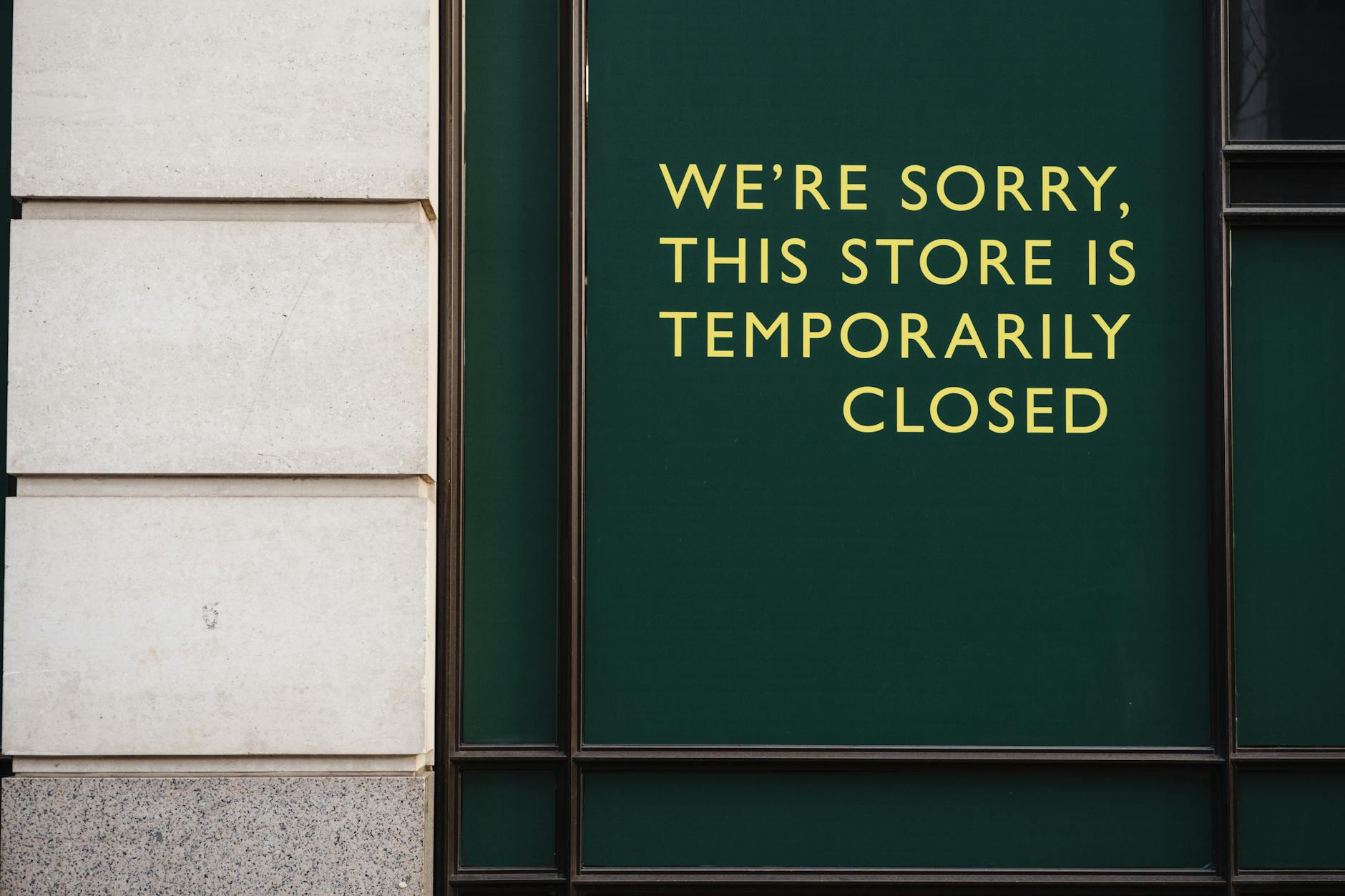
One of the most immediate consequences of a retail breach is operational disruption. Sixty-eight percent of retailers report that business downtime is the most likely outcome of a cyber attack, and for good reason. When a breach is detected, the prudent response is to take affected systems offline to contain the damage and conduct forensic analysis. This can mean disabling point-of-sale systems, taking the e-commerce website offline, or shutting down inventory management systems. The result is that customers cannot make purchases, staff cannot process transactions, and the retailer loses revenue by the hour.
This isn’t a theoretical concern—nearly half of retailers (46%) have said cyber attacks force them to shut down their digital systems entirely. For a retailer in the middle of the holiday shopping season or a planned promotional event, this shutdown can be financially catastrophic. A three-day outage during peak season can result in millions in lost sales. Additionally, 23% of retailers have experienced stock price drops when breached, a visible signal to investors that the company’s security posture is inadequate. These stock price declines often persist long after the breach is resolved, reflecting the market’s assessment that the company may face additional breaches or regulatory penalties.
THE CUSTOMER ABANDONMENT CRISIS
The most damaging consequence of a retail breach may not be financial—it’s behavioral. More than 60% of consumers would stop shopping with a retailer following a data breach, and among higher-income consumers, that figure jumps to 74%. These are not abstract statistics; they represent customers taking their business elsewhere, permanently. The pattern is clear: consumers view data breaches as evidence that a retailer cannot be trusted with their personal information. Even if the retailer wasn’t technically negligent—even if the breach resulted from a sophisticated supply chain attack—customers punish them anyway.
The specific behaviors are telling. Seventy percent of shoppers say they would abandon a merchant altogether after a breach. Sixty-eight percent of consumers reduce their online spending following a breach, even if they don’t immediately switch to a competitor. Forty-two percent of consumers delete their account permanently after a breach, severing the relationship entirely. Additionally, 53% of retailers that experienced breaches report suffering reputational damage, which compounds the financial losses. Fifty percent of consumers reduce their spending with all online merchants after experiencing a breach at any company, suggesting that each retailer’s breach has spillover effects on the entire industry’s reputation.
LEGAL OBLIGATIONS AND REGULATORY PENALTIES
The regulatory burden of a data breach is non-negotiable. Under the FTC’s Safeguards Rule, retailers must notify the Federal Trade Commission within 30 days of discovering a breach that affects 500 or more consumers. This is not optional, and violations carry steep penalties. The FTC’s civil penalty for violation of breach notification rules is $53,088 per violation as of 2025—a number that climbs annually with inflation adjustments. Here’s the catch: each affected consumer and each day of non-compliance can constitute a separate violation. A breach affecting 100,000 customers with a 45-day notification delay could theoretically result in billions in cumulative penalties. Beyond federal requirements, every state, the District of Columbia, Puerto Rico, and the U.S.
Virgin Islands have their own data breach notification laws. These laws vary in their timing requirements, the definition of what triggers notification, and the content required in the notification. Some states require notification within days, others within weeks. Some require retailers to offer two years of credit monitoring; others require longer. Retailers with a national customer base must comply with the strictest state law for each affected customer. Attorneys specializing in data breach response have become essential consulting partners for any large retailer. Additionally, 62% of consumers prefer direct email notification for breach disclosure, and 76% of consumers believe retailers should compensate customers for data breaches—expectations that retailers must navigate legally and practically.

EMERGING THREATS AND THE SHADOW AI FACTOR
A newer and less widely understood cost driver has emerged: shadow AI. Employees using unapproved AI tools—ChatGPT, Claude, Copilot, or other generative AI platforms—to streamline their work are inadvertently creating security gaps. When a support representative pastes customer data into a public AI tool to process faster, or when a manager uses an unauthorized cloud application to manage employee schedules, sensitive information escapes the retailer’s security perimeter. According to IBM’s 2025 Cost of a Data Breach Report, shadow AI incidents add an average of $670,000 to breach costs, making it one of the fastest-growing cost multipliers.
This overhead comes from additional investigation time, expanded breach scope, longer remediation timelines, and increased regulatory scrutiny. The shadow AI problem is particularly insidious because it’s difficult to detect and prevent. Traditional data loss prevention tools monitor email and file transfers, but they struggle with interactive web applications and cloud-based AI services. Retailers discovering that customer data was processed through unapproved AI tools face not only technical remediation but also the regulatory question of whether that unauthorized processing constitutes a secondary breach requiring additional notifications.
RECOVERY, PREVENTION, AND THE FUTURE
Recovery from a retail data breach extends far beyond fixing the technical vulnerability. Retailers must rebuild customer trust through transparent communication, offer extended credit monitoring or identity theft protection services, invest in upgraded security infrastructure, and often pay substantial settlements in class action lawsuits. The timeline for recovery is measured in years, not months. Some retailers never fully recover their customer base or market valuation.
The forward-looking reality is that retail breaches will continue. Attackers have proven that phishing works, that retail systems are valuable targets, and that the payoff justifies the effort. Retailers that survive breaches are those that treat security as a business priority, not an IT checkbox—implementing multi-factor authentication, conducting regular security audits, training employees rigorously against social engineering, and maintaining incident response plans before they’re needed. The cost of prevention is a fraction of the cost of response.
You Might Also Like
- What Happens When Social Networks Are Breached
- What Happens When Marketing Platforms Are Breached
- What Happens When Accounting Software Is Breached