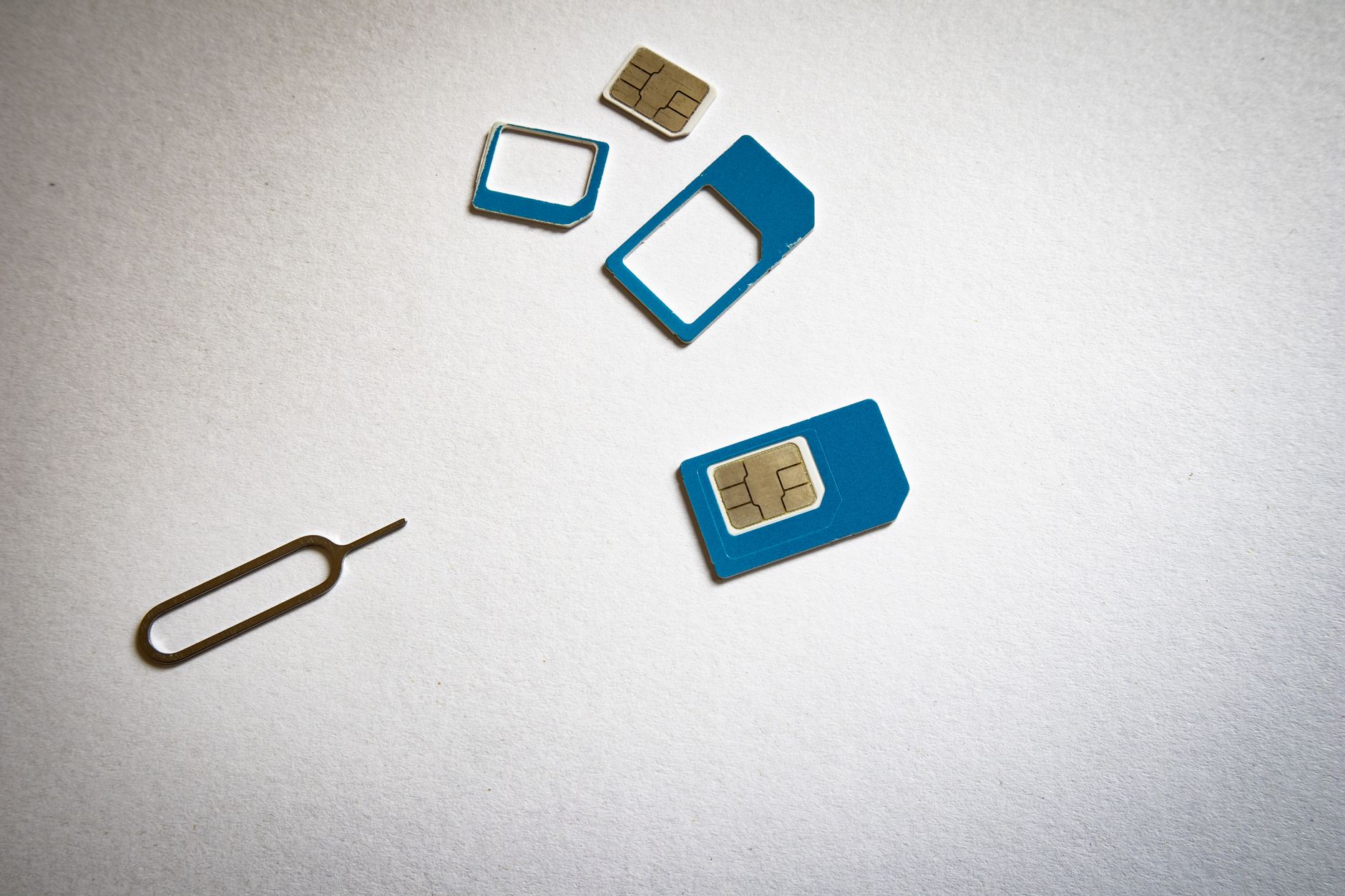
The Federal Communications Commission’s SIM swap rules, adopted in 2023 to stop criminals from hijacking phone numbers, finally have firm compliance dates. Two notices in the Federal Register this week say wireless carriers must follow the core consumer protections by December 17, 2026 for SIM changes and by December 18, 2026 for number transfers to another carrier.
Where it stands: The notice covering SIM changes was published on November 17, 2026 and the one covering port-outs a day later. Until those dates in December, the parts of the 2023 order that require carriers to warn you before moving your number, and to offer a free lock, are not yet binding. Some carriers already offer locks voluntarily, and nothing stops you from turning one on today.
Why your phone number is worth stealing
A SIM swap and a port-out reach the same result by different routes. In a SIM swap, the criminal gets your carrier to move your line onto a SIM card they hold. In a port-out, they pose as you and have the number moved to a different carrier entirely. The FCC’s notice describes the end state of a port-out plainly: the bad actor ends up able to “receive text messages and phone calls intended for the victim.”
That matters because so many accounts treat your phone number as proof that you are you. The FBI’s 2022 warning on the scheme explains the chain: “Once the SIM is swapped, the victim’s calls, texts, and other data are diverted to the criminal’s device.” From there, password-reset links and one-time codes sent by text land with the thief, which is how a phone-company mistake turns into an emptied bank or crypto account. The same alert notes that some schemes rely on a bribed insider, not just a smooth-talking caller: criminals “pay off a mobile carrier employee to switch a victim’s mobile number to a SIM card in the criminal’s possession.”
What the sim swap rules require of carriers
The FCC calls one requirement the center of the whole package: “The cornerstone of our action is a requirement that wireless providers use secure methods of authenticating customers prior to performing SIM changes and number ports.” The order also says what does not count as secure. Carrier checks for these requests “shall not rely on readily available biographical information, account information, recent payment information, or call detail information”, the kind of detail a fraudster can find in a leaked database or a stolen bill.
Around that core, the November 2026 notices list the duties carriers must meet once compliance kicks in:
- Warn you first. Carriers must notify customers of a SIM change request before the change is completed, and of a port-out request before it is carried out.
- Offer a free lock. Every customer must be offered, at no cost, the option to lock or freeze the account so SIM change requests are stopped. The 2023 order adds that turning the lock on and off must not be so burdensome that it effectively discourages people from using it.
- Handle failed attempts. Carriers need processes for responding when someone fails authentication on a SIM change request.
- Tell you what protections exist. Customers must get advance notice of the account protection measures a carrier offers.
- Help victims. Carriers must keep a clear way to report SIM fraud, investigate and fix it promptly, and give customers documentation of fraud on their accounts, which is the paperwork a bank or police report may ask for.
- Keep records. SIM change requests, and the authentication used for each, must be tracked and kept for three years.
The order also targets the insider route. Employees who take inbound customer calls or chats are not supposed to see customer account data (known as CPNI, customer proprietary network information) until the customer has been properly authenticated.
| Rule | What it covers | Compliance required by |
|---|---|---|
| 47 CFR 64.2010(h) | SIM changes: moving your number to a new SIM or device | December 17, 2026 |
| 47 CFR 52.37 | Port-outs: moving your number to a different carrier | December 18, 2026 |
Why it took three years to reach your account
The Commission released its SIM Swap and Port-Out Fraud Order on November 16, 2023, and it appeared in the Federal Register on December 8, 2023. Most of it took legal effect on January 8, 2024, but the parts that create new paperwork and recordkeeping duties for carriers, including the notification and lock provisions above, were “delayed indefinitely” until the White House Office of Management and Budget (OMB) reviewed them under the Paperwork Reduction Act.
According to the new notices, OMB approved those requirements on January 15, 2025. The order had promised that the FCC’s Wireline Competition Bureau would then announce a compliance date, and that announcement is what arrived this week. The notices do not explain the gap between OMB’s approval and the announcement.
What the FBI’s complaint numbers show
The FBI’s Internet Crime Complaint Center (IC3) counts SIM swapping as its own crime type, defined as using “unsophisticated social engineering techniques against mobile service providers to transfer a victim’s phone service to a mobile device in the criminal’s possession.” Its 2025 report shows complaints edging down while losses fell faster:
- 2025: 971 complaints, $17,366,758 in reported losses
- 2024: 982 complaints, $25,983,946 in reported losses
- 2023: 1,075 complaints, $48,798,103 in reported losses
These are only the cases victims reported to IC3, so they describe a floor rather than the full scale of the problem. A single successful swap can also lead to losses that get filed under other headings, such as account takeover or cryptocurrency theft.
What you can do before December
You do not have to wait for the deadline. Several steps work right now:
- Turn on your carrier’s lock. Verizon, for example, offers two separate switches. Its account security page says Number Lock “blocks anyone from moving your mobile number to another carrier until it is turned off,” and SIM Protection blocks moves to another device. Verizon notes that SIM Protection has to be switched off while you upgrade your phone and can be turned back on afterward. For other carriers, look in your online account’s security settings for a SIM lock, port-out lock or number transfer PIN.
- Protect the carrier account itself. The Cybersecurity and Infrastructure Security Agency (CISA) advises people to “Add a PIN and MFA to your mobile carrier account to reduce the risk of SIM-swapping techniques.”
- Stop letting a text be the only key. If your bank, email or broker lets you use an authenticator app, a passkey or a security key, switch to it so a stolen number alone cannot unlock the account. Our guide to the risks of SMS two-factor authentication explains the trade-offs.
- Know the warning signs. A phone that suddenly shows no service while others nearby are fine is a classic tell. We list the others in warning signs of an attempted SIM swap.
If a swap has already happened, the FBI’s first instruction is simple: “Contact your mobile carrier immediately to regain control of your phone number.” Our step-by-step checklist on what to do if your SIM card is swapped covers the banks, email accounts and reports that come next.
What the rules leave out
- No single required method. The FCC chose not to dictate how carriers must verify you, writing that “it is most appropriate to allow wireless providers to analyze and implement the most effective and secure methods”. Quality may vary from carrier to carrier.
- No alert for every failed attempt. The order declined, for now, to require carriers to notify customers immediately after multiple failed authentication attempts on SIM change requests, and asked for further comment instead.
- Nothing about banks. The rules govern wireless carriers. They do not change whether your bank sends sign-in codes by text.
- Some exceptions. The port-out notice says carriers follow different procedures where the Safe Connections Act, a law that helps domestic-violence survivors separate their phone lines from an abuser’s account, requires them.
Frequently Asked Questions
When do the FCC SIM swap rules take effect?
Carriers must comply with the SIM change rules by December 17, 2026 and with the port-out rules by December 18, 2026, according to Federal Register notices published on November 17 and November 18, 2026. Other parts of the 2023 order took effect in January 2024.
Will my carrier lock my number automatically?
No. Under the rules, a free SIM-change lock must be made available to all customers, but it is an opt-in protection. You choose whether to turn it on, and some carriers, such as Verizon, already offer locks you can switch on now.
What is the difference between a SIM swap and a port-out?
In a SIM swap, a criminal gets your number moved to a SIM card they control, usually with the same carrier. In a port-out, they move your number to a different carrier. Either way, your calls and text messages, including sign-in codes, go to them.
Do the new rules make text-message codes from my bank safe?
They make it harder for a criminal to take over your number, but they do not change how your bank signs you in. CISA lists texted and voice codes last among two-factor methods, to be used only as a last resort, so an authenticator app, passkey or security key is a stronger choice where your bank offers one.
How many people report SIM swap fraud to the FBI?
The FBI Internet Crime Complaint Center received 971 SIM swap complaints in 2025, with reported losses of $17,366,758. Those figures cover only cases victims chose to report.
Sources
- Protecting Consumers From SIM-Swap and Port-Out Fraud (FR Doc. 2026-23400, 47 CFR Part 64) — Federal Communications Commission, Federal Register, November 17, 2026
- Protecting Consumers From SIM-Swap and Port-Out Fraud (FR Doc. 2026-23522, 47 CFR Part 52) — Federal Communications Commission, Federal Register, November 18, 2026
- Protecting Consumers From SIM-Swap and Port-Out Fraud (Report and Order, 88 FR 85794) — Federal Communications Commission, Federal Register, December 8, 2023
- Internet Crime Report 2025 — FBI Internet Crime Complaint Center (IC3), 2026
- Criminals Increasing SIM Swap Schemes to Steal Millions of Dollars from US Public (I-020822-PSA) — Federal Bureau of Investigation, IC3, February 8, 2022
- What Verizon is doing to protect my account — Verizon, accessed November 20, 2026
- Mobile Communications Best Practice Guidance — Cybersecurity and Infrastructure Security Agency (CISA), December 18, 2024
- Implementing Phishing-Resistant MFA — Cybersecurity and Infrastructure Security Agency (CISA), October 2022
This article is general consumer-security information, not legal or financial advice. Sign-in options, menus and fees change; confirm each setting on the official website or app of your bank, broker or wireless carrier before relying on it. Data Breach Radar is not affiliated with any bank, broker, carrier or app named here, and no company paid to be mentioned.