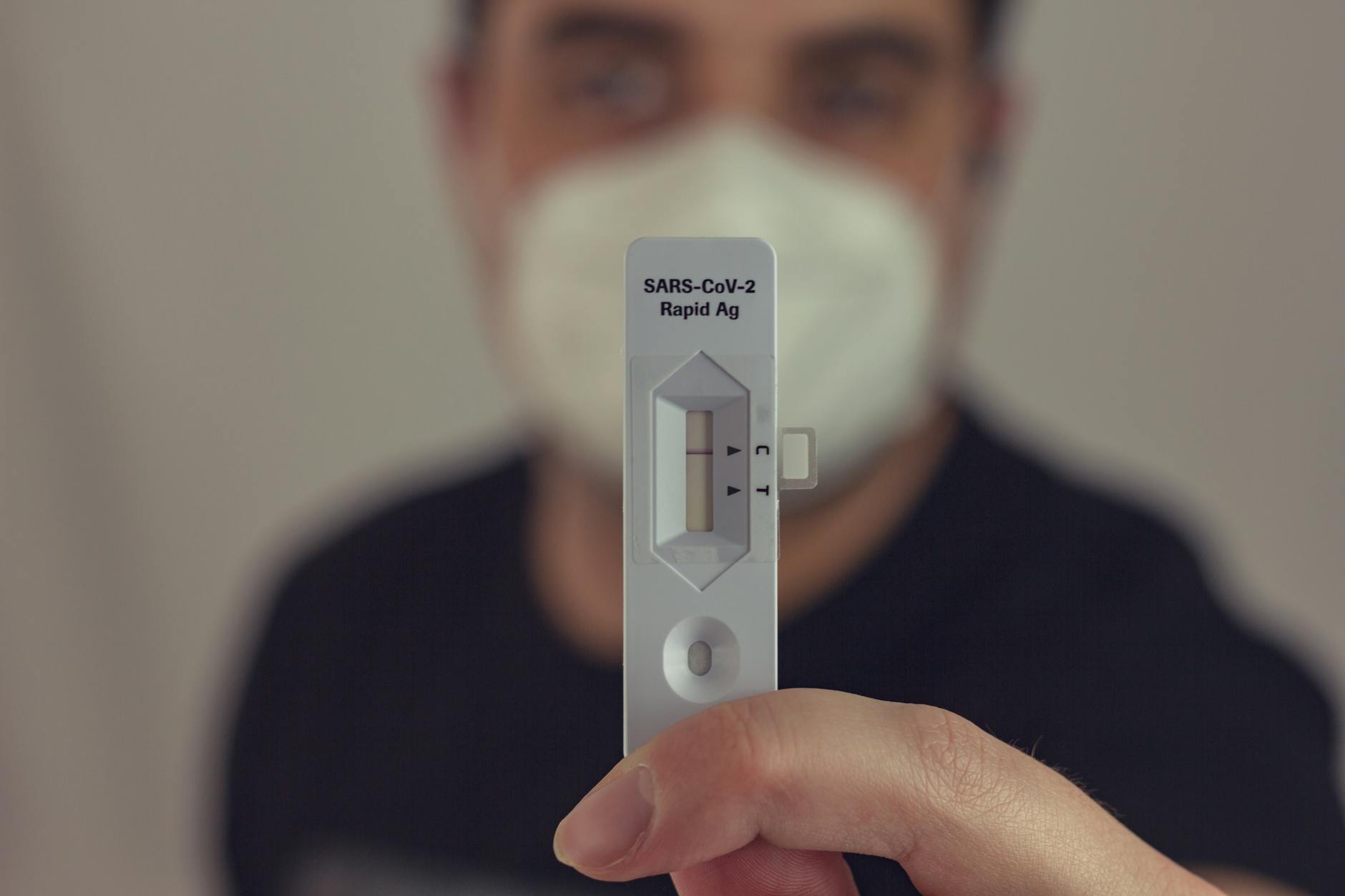
Protecting your drug test results privacy requires a multi-layered approach that addresses who collects your data, how it’s stored, and who can access it. The most direct protection involves understanding your legal rights under state and federal laws, requesting transparency about data handling practices, and knowing when to challenge testing procedures or deny consent to unnecessary testing. For example, if an employer conducts a drug test without your written consent or without a legitimate safety reason, many states allow you to refuse or dispute the results—but only if you understand these protections exist.
Drug test results are sensitive medical information that can affect your employment, professional licenses, insurance rates, and personal reputation. Once this data enters a testing facility’s database, it can be breached, sold to third parties, or retained indefinitely without your knowledge. A 2023 incident involving a major testing laboratory exposed over 1 million records containing names, dates of birth, and test results to unauthorized access for weeks before being discovered.
Table of Contents
- What Makes Drug Test Data a Privacy Risk?
- How Data Breaches and Unauthorized Access Happen
- Your Rights Before and During Testing
- Steps to Minimize Your Data Footprint in Testing Systems
- Challenging Inaccurate Results and Securing Records
- Third-Party Risk: Background Checks and Data Sharing
- Future Protections and Emerging Risks
- Frequently Asked Questions
What Makes Drug Test Data a Privacy Risk?
drug test results are classified as protected health information (PHI) under HIPAA in certain contexts, and as sensitive personal information under various state privacy laws. However, the legal protections have significant gaps. Employment drug tests conducted by third-party labs often fall outside HIPAA protections because employers themselves are not covered entities, meaning the data can be handled with fewer privacy safeguards than medical records held by doctors or hospitals.
Additionally, the absence of unified federal standards means each state determines how long labs can retain samples and results, creating a patchwork of inconsistent protections. The risk intensifies when testing data is shared with background check companies, insurance companies, or law enforcement without explicit authorization. Some labs sell anonymized data to researchers or pharmaceutical companies, while others store physical samples indefinitely in conditions vulnerable to breaches. A 2022 investigation found that one national testing network had retained samples from employees tested five years prior, all without updated consent forms, violating their own stated retention policies.

How Data Breaches and Unauthorized Access Happen
Drug testing laboratories are frequently targeted by cybercriminals because they maintain valuable databases of personal information and medical data combined with minimal security investments. Many smaller testing facilities use outdated systems without proper encryption or segmentation, making them attractive targets. In 2021, a breach at a regional testing company exposed driver’s license numbers, social security numbers, and test results for 50,000 individuals across 12 states—the company didn’t discover the breach for six months.
Beyond external hackers, internal misuse poses an equal danger. Lab employees, contractors, and third-party vendors with database access can view results without legitimate business reasons. Some jurisdictions have documented cases where results were accessed by individuals investigating ex-partners, family members, or friends. The limitation of most privacy laws is that they focus on external breaches rather than internal access control, meaning even if a lab experiences unauthorized viewing of your data, you may have no legal recourse unless you can prove actual damages.
Your Rights Before and During Testing
Informed consent is your primary protection mechanism before a test occurs. In most states, an employer must provide written notice that testing will occur and generally cannot test without your consent, except in specific industries like transportation where federal regulations mandate testing. However, “consent” is often implicit in employment agreements with vague language like “employees must comply with company policies,” making it difficult to refuse. A critical limitation: if you refuse a test that’s required by your industry’s regulations, the employer can often terminate you, meaning your right to refuse exists but comes with employment consequences.
You have the right to observe the sample collection process in many states, which prevents contamination or substitution. You also have the right to request the specific test methodology and ask about the lab’s accreditation status—accredited labs through organizations like SAMHSA follow higher standards. Importantly, you should always ask for written confirmation of the test type (hair, urine, blood) and request a copy of the chain of custody documentation. One example: an employee tested positive for methamphetamine based on a urine test but discovered through the chain of custody records that the sample handling violated protocol, making the result legally challengeable.

Steps to Minimize Your Data Footprint in Testing Systems
Restrict your consent to only what is legally required. If an employer requests expanded testing beyond what regulatory standards mandate, request written justification and consider whether you want to work for an organization collecting unnecessary medical data. When providing samples, supply only what the test requires—don’t volunteer additional personal information beyond name and ID number. Ask the testing facility directly about their data retention policy in writing, and if it exceeds what’s legally required, request earlier destruction of your sample and results.
Request a written privacy notice from the testing lab before providing samples. This notice should specify how long data is retained, who has access, whether it’s shared with third parties, and your rights to access or correct your results. A significant tradeoff: requesting this information may flag you as a privacy-conscious individual to the testing facility or employer, though legally they cannot discriminate against you for exercising privacy rights. Comparing approaches, taking these steps requires more time upfront than simple compliance, but provides documented evidence of your privacy boundaries.
Challenging Inaccurate Results and Securing Records
False positives occur regularly in drug testing. Certain medications, foods, and substances can trigger positive results for drugs you haven’t used—for example, eating a poppy seed bagel can cause a false positive for opioids. Federal law requires confirmation testing with gas chromatography-mass spectrometry (GC-MS) for positive results, but not all labs follow this requirement uniformly. A major limitation: even if you secure a negative confirmation test, the original positive result may remain in databases for years, and employers or background check companies may rely on the initial result without ever seeing your confirmation.
Request all your testing records in writing immediately after any positive result. Under HIPAA (if applicable) or state medical records laws, labs must provide copies within 30 days. If you dispute a result, document your challenge formally with the testing facility and request written explanation of their findings. Keep all communications and results for your personal records, as labs have been known to lose or alter records after disputes arise. One example: an applicant for a professional license was denied based on a positive drug test result; when the testing lab finally provided records, the documentation showed the sample was collected without proper chain of custody, allowing the result to be legally challenged and reversed.

Third-Party Risk: Background Checks and Data Sharing
Your drug test results don’t end with the testing lab. Background check companies purchase or access testing data as part of employment screening packages. These companies operate under the Fair Credit Reporting Act (FCRA), which provides some protections but still allows them to aggregate and sell your information. Many testing labs share data with background check companies by default, sometimes without explicit authorization beyond your initial consent form.
Verifying what data has been shared requires directly contacting background check companies and requesting your file, a process many people never pursue. An example of downstream risk: a job applicant tested negative for substances, but a background check company mistakenly included drug test results from another individual with a similar name in their report. The applicant was rejected for a position based on someone else’s results. Correcting this required the applicant to dispute the error with both the background check company and request correction from the original testing lab. The limitation of current law is that testing labs bear minimal responsibility for accuracy once data leaves their systems.
Future Protections and Emerging Risks
Advocacy for stronger privacy legislation is advancing in several states. California’s expanded privacy laws and pending federal bills propose stricter rules around medical data retention and sharing, but federal comprehensive privacy legislation remains stalled. Employment drug testing itself is under scrutiny in states that have legalized cannabis, creating legal uncertainty about whether positive results for a legal substance should carry the same consequences as illegal drug positives—this uncertainty makes data protection even more critical until laws clarify.
Emerging risks include genetic and biometric testing expanding beyond drug screening. Some employers and insurers are beginning to request additional biological testing that reveals information about disease risk, family history, or genetic predispositions. Protecting your privacy for current drug testing data is foundational for resisting these expanded requests in the future.
Frequently Asked Questions
Can I refuse a drug test without consequences?
It depends on your industry and state law. Safety-sensitive positions regulated by the Department of Transportation, FAA, or nuclear industry typically require mandatory testing by federal law—refusing can result in immediate termination or license revocation. In other industries, employers can usually enforce testing as a condition of employment, meaning you can refuse but face employment consequences.
How long can a testing lab keep my samples and results?
Federal law requires labs to retain positive results for at least one year; there is no federal maximum. State laws vary widely—some require destruction within 30-90 days, while others have no limit. Always request written information about the specific lab’s retention policy before testing.
What should I do if I test positive and believe it’s a false positive?
Request confirmation testing (GC-MS) immediately if it wasn’t already performed. Request written results and your complete file in writing. Document your dispute formally with the lab. If the issue involves your employment, consult an employment attorney—some states have specific legal remedies for inaccurate test results that affect employment.
Can background check companies access my drug test results without my knowledge?
Testing labs can share results with background check companies if your consent authorizes it, which many consent forms do implicitly. You can request your file from any background check company to see what they have. If information is inaccurate, you have the right to dispute it under the Fair Credit Reporting Act.
What’s the difference between a lab accredited by SAMHSA versus one that isn’t?
SAMHSA-accredited labs must follow strict protocols for chain of custody, confirmation testing, and quality control. Non-accredited labs may skip confirmation testing and have looser documentation standards, making results more vulnerable to error and challenge.
Should I keep copies of my test results?
Yes. Keep all test results, correspondence with the lab, and chain of custody documentation. These are your evidence if you ever need to dispute a result, challenge an employment decision, or respond to an inaccuracy appearing in your background.
You Might Also Like
- How to Protect Your Lab Test Results Privacy
- How to Protect Your Therapy Notes Privacy
- How to Protect Your Vision Insurance Records